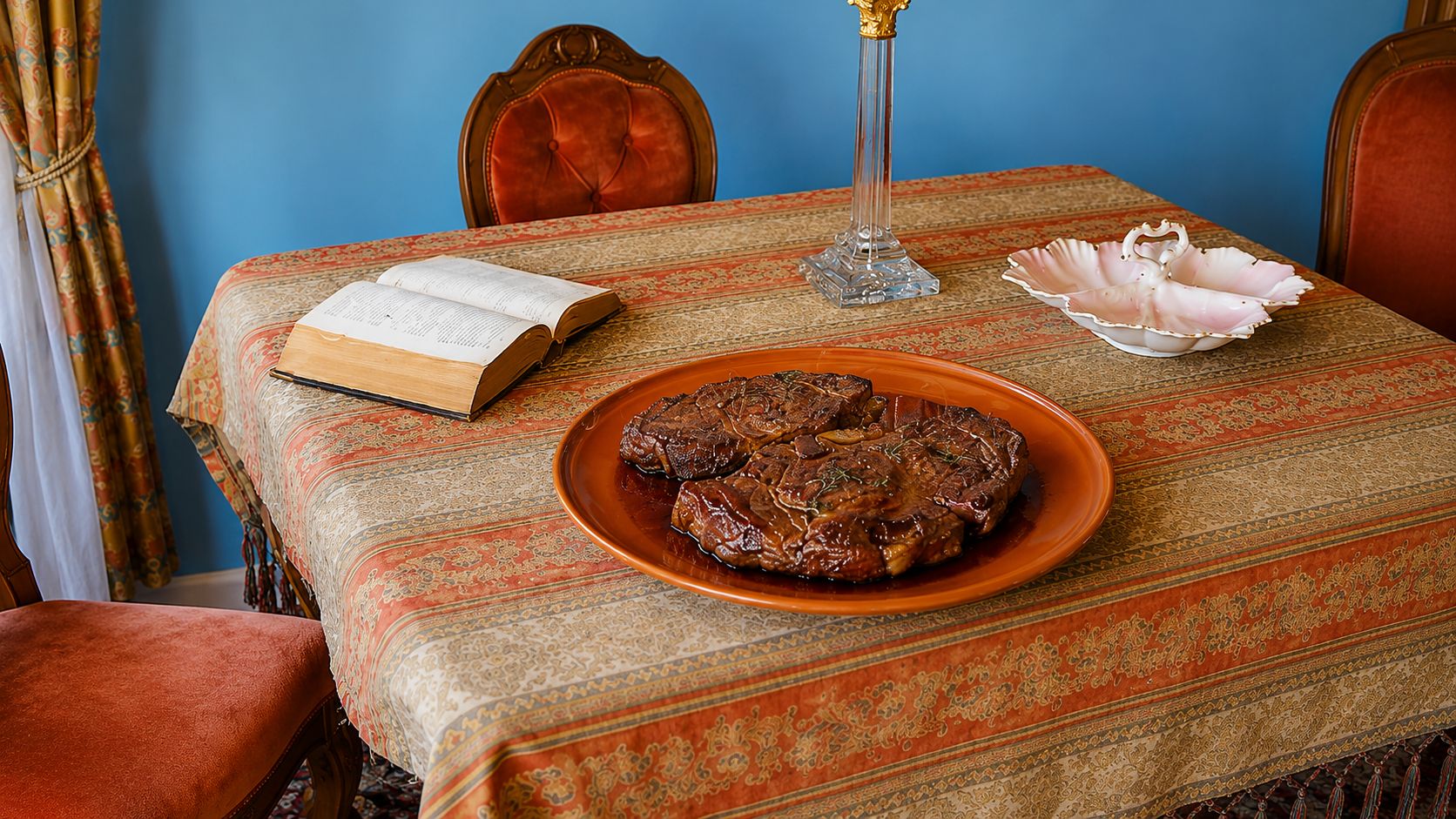
Steak Dinner Ideas: Pan-Seared Ribeye That Actually Works
For a classic steak dinner, season ribeye steaks with salt and pepper, sear them in a screaming-hot cast iron skillet for 3 to 4 minutes per side, then baste with butter, garlic, and thyme until they reach your preferred temperature. Rest the steaks for 5 to 10 minutes before slicing so the juices stay in the meat instead of running across the cutting board like evidence.
When I was a kid, my uncle kept a cast iron skillet in the oven at all times because he said it "kept the house honest." I did not know what that meant then, and I am not fully sure he did either, but everybody respected the skillet. It was black, heavy, slick from years of bacon grease, and dangerous enough that children were warned about it the same way we were warned about snakes, loose dogs, and women at church who said "bless your heart" without blinking.
That skillet was not cookware. It was a family member with a handle.
My uncle used it for everything: cornbread, fried potatoes, pork chops, breakfast sausage, and once, during a storm, as a doorstop when the wind blew so hard it made the screen door sound possessed. But steak was when he got serious. He would stand at the stove in a white undershirt, one hand on the tongs, staring into the pan like he was negotiating with fire itself. Nobody talked much when steak hit the skillet. You could hear the sear from the next room, loud and violent, like the cow had come back with an opinion.
The first time I tried to cook steak myself, I did every wrong thing a human can do without involving law enforcement. I pulled it cold from the fridge, barely dried it, put it in a pan that was warm in the same way a porch chair is warm in April, then flipped it six times because I was nervous and apparently trying to interrogate it. The result was gray, tight, and sad. It looked less like dinner and more like something confiscated at a county fair.
For years, I thought good steak required a grill, a special butcher, a blood oath, and maybe one of those men on the internet who owns fourteen knives and calls everyone "brother." It does not. A good steak dinner mostly requires you to stop panicking and respect the basics.
Dry steak browns. Wet steak steams. That is not philosophy. That is physics with consequences.
A hot pan builds the crust. Not a kind-of-hot pan. Not a pan you hope is hot enough because you are hungry and emotionally tired. A smoking-hot cast iron skillet. The kind of hot that makes your ventilation fan realize it has been coasting through life. You lay the ribeye down, leave it alone, and let the crust form. Do not poke it. Do not scoot it around. Do not hover over it like a worried parent at a spelling bee.
Then comes the butter, garlic, and thyme. That is when the whole kitchen changes. You flip the steak, drop in the butter, let it foam, tilt the pan, and baste like you have done something worthwhile with your evening. The garlic and thyme do not need to give a speech. They just ride through that butter and make the steak taste deeper, richer, and more expensive than your actual choices.
The thermometer matters too. I know some people like to pretend they can tell doneness by touching the steak and comparing it to parts of their hand. Good for them. I own a thermometer because I have ruined enough meat to become humble. Ribeye is best around medium-rare, about 130 to 135 degreesF after resting, where the fat softens and the steak still eats tender. Guessing is how you turn a beautiful ribeye into a chew toy with seasoning.
And then you rest it.
This is the part that got me corrected at a church potluck by a woman who had the authority of a judge and the haircut of someone who had survived three recessions without changing brands of hairspray. I mentioned I let steak rest "a minute or so," and she turned her head so slowly the whole table went quiet. Then she said, "Baby, that's not resting. That's loitering."
She was right.
Rest the steak 5 to 10 minutes. Let the juices settle back where they belong. If you cut it too early, everything runs out onto the board and suddenly your steak dinner is sitting there dry and embarrassed, surrounded by its own bad decisions.
This pan-seared ribeye is the steak dinner I make when I want the meal to feel deliberate. It is not complicated. It is not fancy. It is just salt, pepper, heat, butter, garlic, thyme, and enough discipline to leave the steak alone at the right moments.
That is the whole trick.
Most good cooking is just knowing when to act and when to quit touching things.
Ingredients
- 2 ribeye steaks, 1 to 1.25 inches thick (about 12-14 oz each)
- 1.5 teaspoons kosher salt (plus more to taste)
- 1 teaspoon freshly cracked black pepper
- 1 tablespoon neutral oil with a high smoke point (avocado or canola)
- 3 tablespoons unsalted butter
- 4 cloves garlic, smashed and left in their skins
- 4 sprigs fresh thyme
- Flaky sea salt for finishing
Instructions
- 1Pull the steaks from the refrigerator 30-45 minutes before cooking and set them on a wire rack or plate at room temperature. This is not optional —? cold steak hits a hot pan and the outside overcooks before the inside catches up.
- 2Pat the steaks completely dry with paper towels on all sides. This is the most important step for getting a real crust. Moisture is the enemy of browning. Pat them like you mean it.
- 3Season generously on both sides and the edges with kosher salt and cracked black pepper. Press the seasoning in lightly.
- 4Set a cast iron skillet over high heat for 2-3 minutes until it is smoking. You want it legitimately hot —? not 'kind of hot,' not 'seems hot enough.' Smoking hot.
- 5Add the oil to the pan and swirl to coat. Lay the steaks in the pan away from you and do not move them for 3-4 minutes. You are building a crust. Let it build.
- 6Flip the steaks once. Add the butter, smashed garlic, and thyme sprigs to the pan immediately after flipping.
- 7Once the butter is melted and foaming, tilt the pan slightly and use a large spoon to continuously baste the steaks with the hot butter. Spoon it over the top constantly for 2-3 minutes while the second side sears.
- 8Check internal temperature with an instant-read thermometer: 125°F for rare, 130-135°F for medium-rare (recommended), 140°F for medium. The steak will rise 5 degrees as it rests.
- 9Transfer steaks to a cutting board and rest uncovered for at least 5 minutes, preferably 8-10. Do not cut into them early. The juice needs to redistribute or it will run straight onto the board and your dinner will taste like regret.
- 10Finish with a pinch of flaky sea salt before serving. Slice against the grain if cutting, or serve whole.
Pro Tips
- Dry is everything. A wet steak steams instead of sears, and steamed steak is a sad experience no one deserves. Pat those steaks dry twice if you have to.
- Your thermometer is your best friend and the only thing standing between you and a $20 piece of meat you overcook in front of company. Buy a cheap instant-read one and use it without shame.
- If your kitchen fills with smoke, that means the pan is hot enough and your ventilation fan is underperforming —? open a window, not a new pan. The smoke is a feature, not a malfunction.
Substitutions
Storage Instructions
Leftover steak keeps in an airtight container in the refrigerator for up to 3 days. Reheat gently in a skillet over medium-low heat with a splash of beef broth to keep it from drying out —? about 2 minutes per side. Do not microwave it. I will not explain why. Just don't.
Make Ahead
You can season the steaks and leave them uncovered on a rack in the refrigerator for up to 24 hours before cooking —? this is actually a dry-brine technique that deepens flavor and helps the exterior dry out even further for a better crust. Pull them out 30-45 minutes before cooking as directed.
Frequently Asked Questions
Do I really need a cast iron skillet for this steak dinner?
Cast iron is strongly preferred because it holds high heat evenly and doesn't lose temperature when cold steak hits the surface. A stainless steel skillet works as a backup. Do not use nonstick —? it can't handle the heat required for a proper sear, and pushing it that hard will ruin the pan. If you don't own cast iron, this is a good enough reason to buy one.
What's the best internal temperature for a pan-seared ribeye?
Medium-rare at 130-135°F is the target for ribeye —? the fat in the marbling renders fully at this temperature and the steak stays tender. Pull it off heat at 130°F and let carryover cooking bring it to 135°F during the rest. At medium (140°F) it's still good. Above 145°F you're losing the texture that makes ribeye worth the money.
Why did my steak turn out gray and steamed instead of browned?
Two likely causes: the pan wasn't hot enough, or the steak was too wet. You need a smoking-hot pan before the steak ever touches it, and the surface of the steak must be completely dry. Moisture creates steam, which prevents browning. Pat the steak dry, let the pan fully preheat, and don't crowd the pan with two steaks that are touching —? they'll steam each other.
Can I make this steak dinner ahead of time for a dinner party?
You can dry-brine the steaks up to 24 hours in advance (season and leave uncovered on a rack in the fridge), which actually improves the crust. The sear itself should happen right before serving —? steak doesn't hold well and reheating loses the crust. For a crowd, consider reverse-searing: oven at 250°F to 10 degrees below your target temp, then a 90-second sear per side to finish.
How do I store leftover steak and reheat it without ruining it?
Store in an airtight container in the refrigerator for up to 3 days. To reheat, use a skillet over medium-low heat with a small splash of beef broth and a pat of butter, about 2 minutes per side, covered loosely with foil. This keeps it from drying out. You can also slice it cold over a salad or into a steak sandwich, which avoids the reheating problem entirely.
Can I make this steak dinner dairy-free?
Yes. Skip the butter baste and instead finish with a high-quality olive oil or a drizzle of garlic-infused oil after the steak comes off the heat. You'll lose some of the richness the basting adds, but the sear will still be excellent. Some people also use a good vegan butter alternative successfully —? just make sure it can handle moderate heat without burning.
What should I serve with a ribeye steak dinner?
The pan drippings left in the skillet after you pull the steak are almost criminal to waste —? deglaze with a splash of beef broth or red wine, scrape up the fond, and you have a simple pan sauce in under three minutes. Classic sides that hold up to ribeye: roasted asparagus, garlic mashed potatoes, creamed spinach, or a simple wedge salad. Keep the sides sturdy —? ribeye doesn't need competition, it needs backup.
How thick should a steak be for pan-searing, and does it matter?
Thickness matters significantly. A steak thinner than 3/4 inch will overcook before you get a proper crust. A steak between 1 and 1.25 inches is the ideal range for the pan-sear method —? thick enough to develop a crust while still reaching medium-rare in the center. Anything over 1.5 inches benefits from a reverse sear (oven first, then pan) to ensure the center cooks evenly without burning the outside.