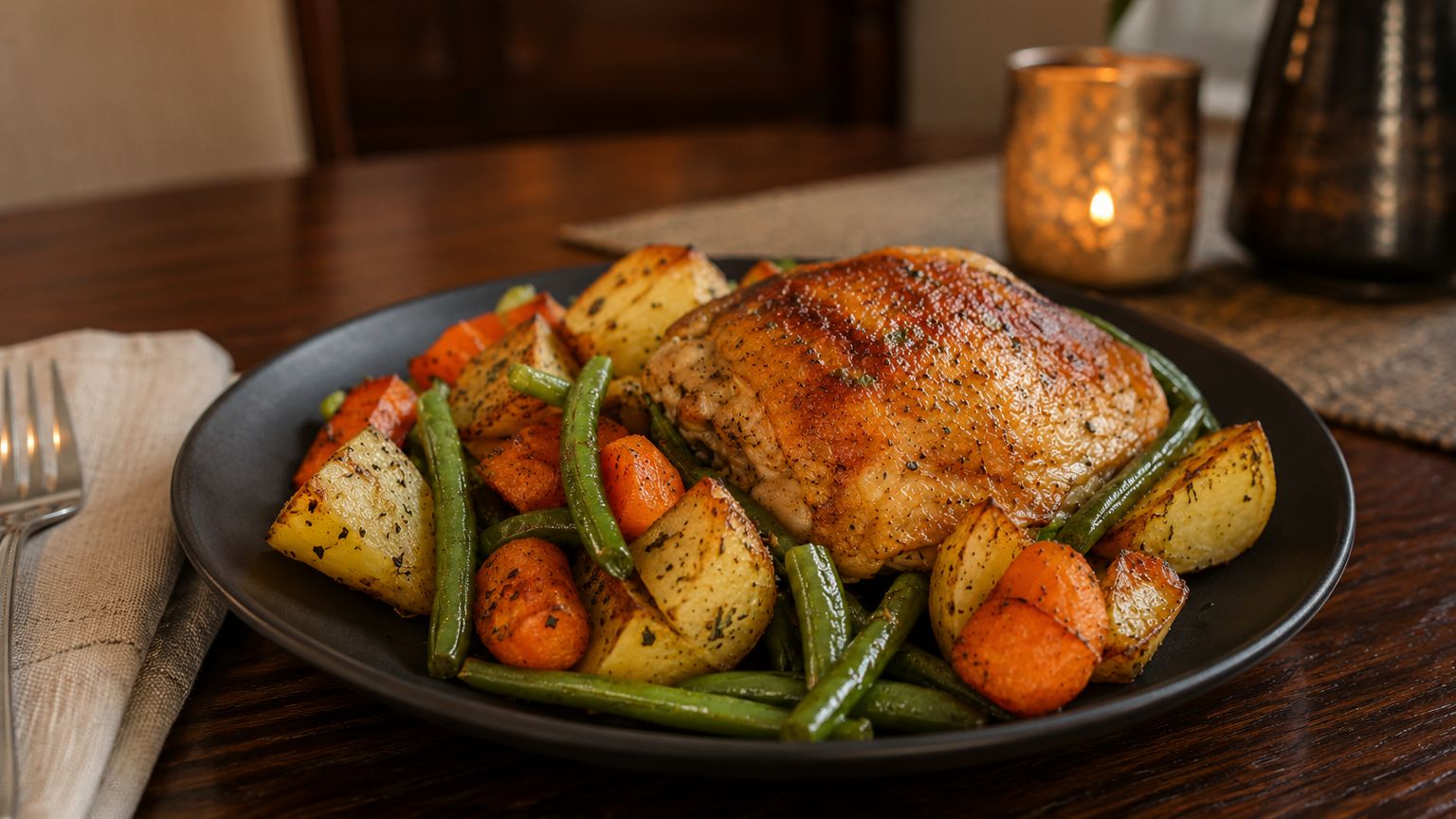
Sheet Pan Dinners: Lemon Herb Chicken Thighs & Roasted Vegetables
Sheet pan dinners are made by arranging proteins and vegetables on a rimmed baking sheet, seasoning everything together, and roasting at high heat (400–425°F) until cooked through. Most recipes come together in 30–45 minutes with minimal prep and only one pan to wash.
I started making sheet pan dinners during a period when I had exactly zero interest in washing multiple pots and had also promised myself I would eat at home more often. Those two constraints, in combination, produce sheet pan cooking — everything on one pan, oven does the work, one item to scrub at the end. It is the cooking format of someone who has thought carefully about the back end of dinner.
The version with chicken thighs and vegetables became the standard because it required no precision timing and produced a dinner that tasted like something built rather than assembled. Bone-in chicken thighs go skin-side up on a sheet pan. Vegetables — whatever needs to be used up — go around them tossed in olive oil, garlic, salt, and pepper. The chicken renders fat as it cooks and some of it drips onto the vegetables, which is better than any oil you could have added yourself.
The lemon-herb component: zest the lemon over the chicken before it goes in. Zest releases the citrus oils into the surface of the skin, which caramelize and concentrate in the oven in a way that juice added before cooking does not. Squeeze the juice over everything in the last five minutes. Fresh herbs — thyme, rosemary, or whatever you have — go under the skin and on the vegetables.
The mistake people make is overcrowding. Everything on the pan needs space to roast rather than steam — if vegetables are piled on each other they boil in their own moisture and go soft and pale. One layer, spaced out, edges touching the hot pan surface. The contrast between the crispy chicken skin and the caramelized edges of the vegetables is the whole point of the method.
Ingredients
- 4 bone-in, skin-on chicken thighs (about 2.5 lbs total)
- 1 lb baby Yukon Gold potatoes, halved
- 2 bell peppers (any color), cut into 1-inch pieces
- 1 medium red onion, cut into wedges
- 3 tablespoons olive oil
- 4 garlic cloves, minced
- 1.5 teaspoons smoked paprika
- 1 teaspoon garlic powder
- 1 teaspoon dried oregano
- 1 teaspoon kosher salt, plus more to taste
- 1/2 teaspoon black pepper
- 1/2 teaspoon onion powder
- Optional: fresh parsley and lemon wedges for serving
Instructions
- 1Preheat your oven to 425°F. Line a large rimmed baking sheet (18x13 inch) with aluminum foil and set a wire rack inside if you have one —? if not, the foil alone works fine.
- 2In a small bowl, combine the smoked paprika, garlic powder, onion powder, dried oregano, salt, and black pepper. Stir together until mixed.
- 3Pat the chicken thighs completely dry with paper towels. This is not optional. Wet chicken does not brown —? it steams, and steamed skin is a sadness you don't need.
- 4Place the potatoes, bell peppers, and red onion on the sheet pan. Drizzle with 2 tablespoons of olive oil and about two-thirds of the spice mixture. Toss well to coat and spread into a single layer, leaving space in the center for the chicken.
- 5Rub the chicken thighs with the remaining 1 tablespoon of olive oil and the remaining spice mixture, including the minced garlic. Get under the skin if you can —? about 30 seconds of effort that makes a real difference.
- 6Nestle the chicken thighs skin-side up among the vegetables, making sure the skin isn't covered by anything.
- 7Roast at 425°F for 35–42 minutes, until the chicken skin is deeply golden and an instant-read thermometer inserted into the thickest part of the thigh reads 165°F. The vegetables should be tender and charred at the edges.
- 8If the skin isn't as crispy as you want at 40 minutes, switch the oven to broil for 2–3 minutes and watch it closely. Pull the pan and let everything rest for 5 minutes before serving.
- 9Serve with fresh parsley scattered over the top and lemon wedges on the side if using.
Pro Tips
- Cut your vegetables to roughly the same size so they finish cooking at the same time. Uneven cuts are the most common reason part of your pan is perfect and part of it is not done —? and you'll notice at the worst possible moment.
- Don't crowd the pan. If the vegetables are piled on top of each other they will steam instead of roast, and steamed peppers have a different energy entirely. Use two pans before you compromise on this.
- Bone-in, skin-on thighs are the right call here. Boneless chicken breast can work but it finishes faster —? around 22–25 minutes —? and you'll need to pull it before the vegetables are done unless you give the vegetables a 10-minute head start.
Substitutions
Storage Instructions
Store leftovers in an airtight container in the refrigerator for up to 4 days. Reheat in a 375°F oven for 10–12 minutes to restore some crispness to the skin —? the microwave will work but the skin will soften completely. Freeze cooled chicken (without the vegetables) for up to 2 months.
Make Ahead
Season the chicken up to 24 hours ahead and store uncovered on a plate in the refrigerator —? this actually helps the skin dry out further and get crispier in the oven. Cut and store the vegetables in an airtight container in the fridge for up to 2 days before cooking.
Frequently Asked Questions
Why aren't my vegetables getting crispy in sheet pan dinners?
Two reasons, almost every time: the pan is overcrowded, or the oven isn't hot enough. Vegetables need space and dry heat to roast instead of steam. Spread everything in a single layer with room between pieces, and don't go below 400°F. If you have a lot of vegetables, use two sheet pans rather than stacking them on one.
Can I use boneless skinless chicken breasts instead of thighs?
Yes, but the timing changes significantly. Boneless chicken breasts cook to 165°F in about 20–25 minutes at 425°F, which means your vegetables won't be done yet. Either give the vegetables a 10–15 minute head start before adding the chicken, or cut the chicken into large chunks to help it finish closer to the same time as everything else.
Why did my chicken skin come out rubbery instead of crispy?
The skin had moisture on it going into the oven. Pat chicken completely dry with paper towels before seasoning —? this is the most important step in the whole recipe. Also check that nothing is sitting on top of the skin on the pan. If it's still not crisping by the end, two to three minutes under the broiler will fix it.
Can I make sheet pan dinners ahead of time for meal prep?
Absolutely. Cook the full recipe, let it cool completely, and portion into containers for up to four days in the refrigerator. Reheat in a 375°F oven for 10–12 minutes. You can also season the chicken up to 24 hours before cooking and refrigerate it uncovered, which improves the skin texture when it roasts.
How do I store and reheat sheet pan dinner leftovers?
Refrigerate in an airtight container for up to 4 days. For best results, reheat in the oven at 375°F for 10–12 minutes rather than the microwave —? the microwave reheats evenly but turns the chicken skin soft. Chicken can also be frozen for up to 2 months, though the roasted vegetables don't freeze as well and are better eaten fresh.
Is this recipe gluten-free or dairy-free?
As written, this recipe is naturally gluten-free and dairy-free —? no flour, butter, or dairy products are used. Double-check your spice labels if you're cooking for someone with celiac disease, since some spice blends include fillers. Everything else in the ingredient list is safe for both diets as written.
What size sheet pan do I need for this recipe?
Use a standard rimmed half-sheet pan, which measures 18x13 inches. This is the most common size sold at kitchen stores and is what this recipe is built for. A quarter-sheet pan is too small for four servings and will crowd the food. If your pan is smaller, split the recipe across two pans and rotate them halfway through cooking.
Can I add different vegetables and seasonings to this base recipe?
This recipe is built to be adapted. The cooking method stays the same —? 425°F, single layer, 35–45 minutes depending on the protein. Swap in sweet potatoes, broccoli, asparagus, fennel, or cauliflower. Just note that tender vegetables like asparagus or cherry tomatoes need less time and should be added to the pan partway through cooking, not at the beginning.