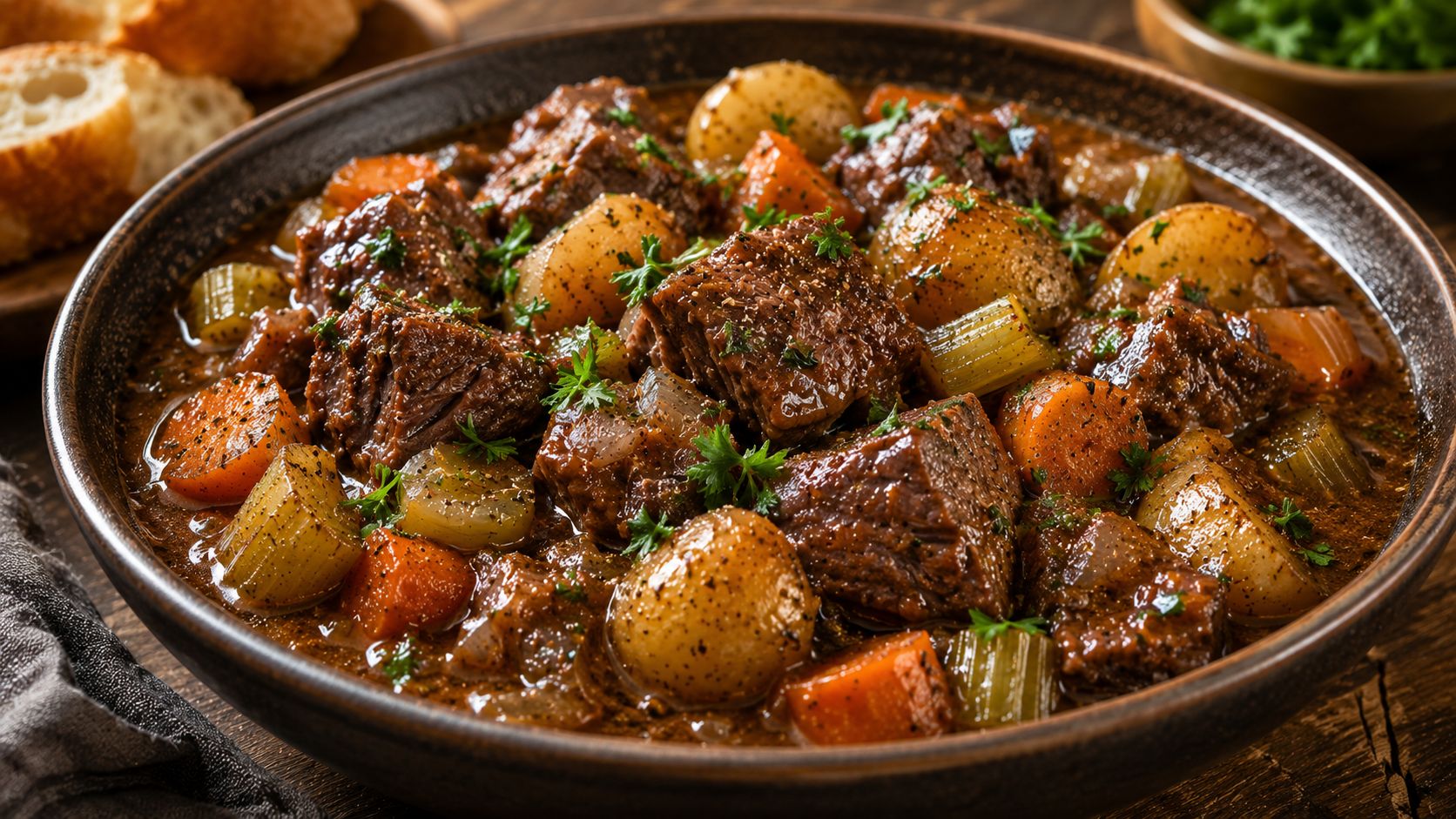
Slow Cooker Recipes: The Pot That Works While You Don't
Slow cooker recipes work by combining ingredients in the insert, setting the temperature to Low (8 hours) or High (4-5 hours), and letting the moist, sealed heat do the work without stirring. Most recipes require minimal prep—?browning meat first improves flavor but is optional—?and the result is deeply tender, fully cooked meals with almost no active cooking time.
My first slow cooker came from a coworker who was cleaning out her apartment before a move. She said she'd used it twice in three years and thought it was a bad purchase, but that was because she'd used it for things it wasn't designed for, which I only understood later after making the same mistakes. She was right that it had limitations. She was wrong that it wasn't useful.
Slow cookers are good at a specific category of cooking: tough cuts of meat with connective tissue that need low sustained heat to break down into gelatin. Braised short ribs, pulled pork, beef stew, chili, beans. They are not good at producing crusty exteriors, reducing sauces, or cooking anything that requires dry heat. The internet is full of slow cooker recipes for things that don't belong in a slow cooker, and the results are uniformly fine in a disappointed way.
The variables that make slow cooker recipes work: enough acid to help break down connective tissue (a splash of wine, vinegar, or canned tomatoes), enough aromatics to have something to absorb during the long cook, and the right cut of meat. Sear the meat before it goes in if you have ten minutes — the browning produces flavor compounds that the slow cooker can't create on its own. Don't skip the sear if you want depth.
What comes out after eight hours of low and slow is braised in a way that a quick-cook method can't replicate. The collagen has melted. The flavors have merged. The meat falls apart. This is what the pot is for, and within this category it is genuinely excellent.
Ingredients
- 2 lbs beef chuck roast, cut into 1.5-inch cubes
- 1 teaspoon kosher salt, plus more to taste
- 1/2 teaspoon black pepper
- 2 tablespoons olive oil (for browning)
- 1 lb baby Yukon Gold potatoes, halved
- 3 large carrots, peeled and cut into 1-inch pieces
- 3 stalks celery, cut into 1-inch pieces
- 1 medium yellow onion, diced
- 4 cloves garlic, minced
- 2 tablespoons tomato paste
- 2 cups beef broth, low sodium
- 1 cup dry red wine (or additional beef broth)
- 1 tablespoon Worcestershire sauce
- 1 teaspoon dried thyme
- 1 teaspoon dried rosemary
- 2 bay leaves
- 3 tablespoons cornstarch
- 3 tablespoons cold water
- Fresh parsley, chopped, for serving
Instructions
- 1Pat the beef cubes completely dry with paper towels and season all over with salt and pepper. Drying the surface is the single most important step —? wet beef steams instead of browns, and you'll know the difference.
- 2Heat olive oil in a large skillet over medium-high heat until shimmering. Working in batches so you don't crowd the pan, sear the beef 2-3 minutes per side until deeply browned on at least two surfaces. Do not rush this. Transfer seared beef to the slow cooker insert.
- 3Add the onion to the same skillet and cook 2 minutes, scraping up any browned bits from the bottom with a wooden spoon. Add the garlic and tomato paste and cook 1 more minute, stirring constantly. Pour in the red wine and let it bubble for 30 seconds. Pour this entire mixture over the beef in the slow cooker.
- 4Add potatoes, carrots, celery, beef broth, Worcestershire sauce, thyme, rosemary, and bay leaves to the slow cooker. Stir gently to combine. The liquid should come about halfway up the meat and vegetables —? not cover them entirely.
- 5Place the lid on the slow cooker. Cook on LOW for 7-8 hours or HIGH for 4-5 hours. The beef should be completely tender and break apart easily when pressed with a spoon.
- 6About 20 minutes before serving, whisk together the cornstarch and cold water in a small bowl until smooth. Remove the lid, discard the bay leaves, and stir the cornstarch slurry directly into the stew. Replace the lid and cook on HIGH for 20 minutes to thicken.
- 7Taste and adjust salt and pepper. Serve hot, topped with fresh parsley, with crusty bread or over egg noodles.
Pro Tips
- Don't skip browning the beef. I know the whole appeal of slow cooker recipes is supposed to be 'dump and go,' and I have done it the dump-and-go way, and it tastes like food that didn't want to be there. Ten minutes of browning adds a depth you genuinely can't fake.
- Resist the urge to lift the lid. Every time you check on it, you add 15-20 minutes to the cook time because the slow cooker has to rebuild its steam environment from scratch —? which is dramatic, but also true.
- Cut your vegetables uniformly and larger than you think you need to. Small pieces after 8 hours will dissolve into the broth, which the stew finds acceptable but you probably won't.
Substitutions
Storage Instructions
Store cooled stew in an airtight container in the refrigerator for up to 4 days. Reheat on the stovetop over medium-low heat, adding a splash of broth if needed. Freeze in portions for up to 3 months; thaw overnight in the refrigerator before reheating.
Make Ahead
Prep and brown the beef, prep the vegetables, and make the skillet sauce up to 24 hours ahead. Store everything separately in the refrigerator. In the morning, combine in the slow cooker insert and start cooking.
Frequently Asked Questions
Do I really have to brown the meat before putting it in the slow cooker?
Technically no, but practically yes. Browning creates the Maillard reaction —? the same chemical process that makes a good crust on a steak —? and that layer of flavor doesn't happen inside a slow cooker because the temperature never gets high enough. You can skip it, and the stew will still be safe and edible. It just won't be as good, and you'll know it, and that's the kind of thing that stays with a person.
Can I put frozen beef directly in the slow cooker?
No. This is a food safety issue, not a preference. Frozen meat spends too long in the temperature danger zone (40°F–140°F) before reaching a safe internal temperature in a slow cooker, which can allow bacteria to multiply. Always thaw meat fully in the refrigerator before slow cooking.
Why did my beef stew come out watery?
Three likely culprits: too much liquid at the start (slow cookers trap moisture, so use less broth than you would on the stovetop), not adding the cornstarch slurry at the end to thicken, or lifting the lid repeatedly during cooking. The fix is always the cornstarch slurry step —? mix equal parts cornstarch and cold water, stir it in, and cook uncovered on High for 20-30 minutes.
Can I make this slow cooker beef stew ahead of time?
Yes, and it's actually better the next day once the flavors have had time to settle in together. Cook the stew completely, cool it to room temperature, then refrigerate for up to 24 hours. Reheat gently on the stovetop over medium-low heat, adding a small splash of broth if the stew has thickened too much overnight. This is an excellent make-ahead meal for guests or meal prep.
How do I store and reheat leftover slow cooker stew?
Transfer cooled stew to airtight containers and refrigerate for up to 4 days. For longer storage, freeze in individual portions for up to 3 months. Thaw frozen stew overnight in the refrigerator before reheating. Reheat on the stovetop over medium-low heat, stirring occasionally, or microwave in 90-second intervals. The stew thickens considerably when cold, so add a few tablespoons of broth when reheating.
Can I make this recipe gluten-free?
Yes. The recipe as written is already gluten-free as long as you confirm your beef broth and Worcestershire sauce are gluten-free (most are, but some brands add malt vinegar or wheat). The cornstarch thickener is naturally gluten-free. Serve over rice or gluten-free noodles instead of egg noodles or regular bread.
Should I use the Low or High setting on my slow cooker?
For beef stew, Low for 7-8 hours is the better choice. The longer, gentler cooking breaks down the collagen in chuck roast more completely, giving you that pull-apart texture. High for 4-5 hours works on a compressed timeline but the meat is slightly less tender. Never cook less than 4 hours on High —? the vegetables will be underdone and the beef will still be tough.
Can I add other vegetables to this slow cooker stew?
Yes. Parsnips and turnips work beautifully alongside the carrots and hold up well over long cooking. Mushrooms (cremini or button) can go in at the start for a meatier texture or stirred in during the last 30 minutes for a firmer bite. Avoid zucchini, peas, or leafy greens at the start —? they'll dissolve. Add them in the final 20-30 minutes of cooking instead.