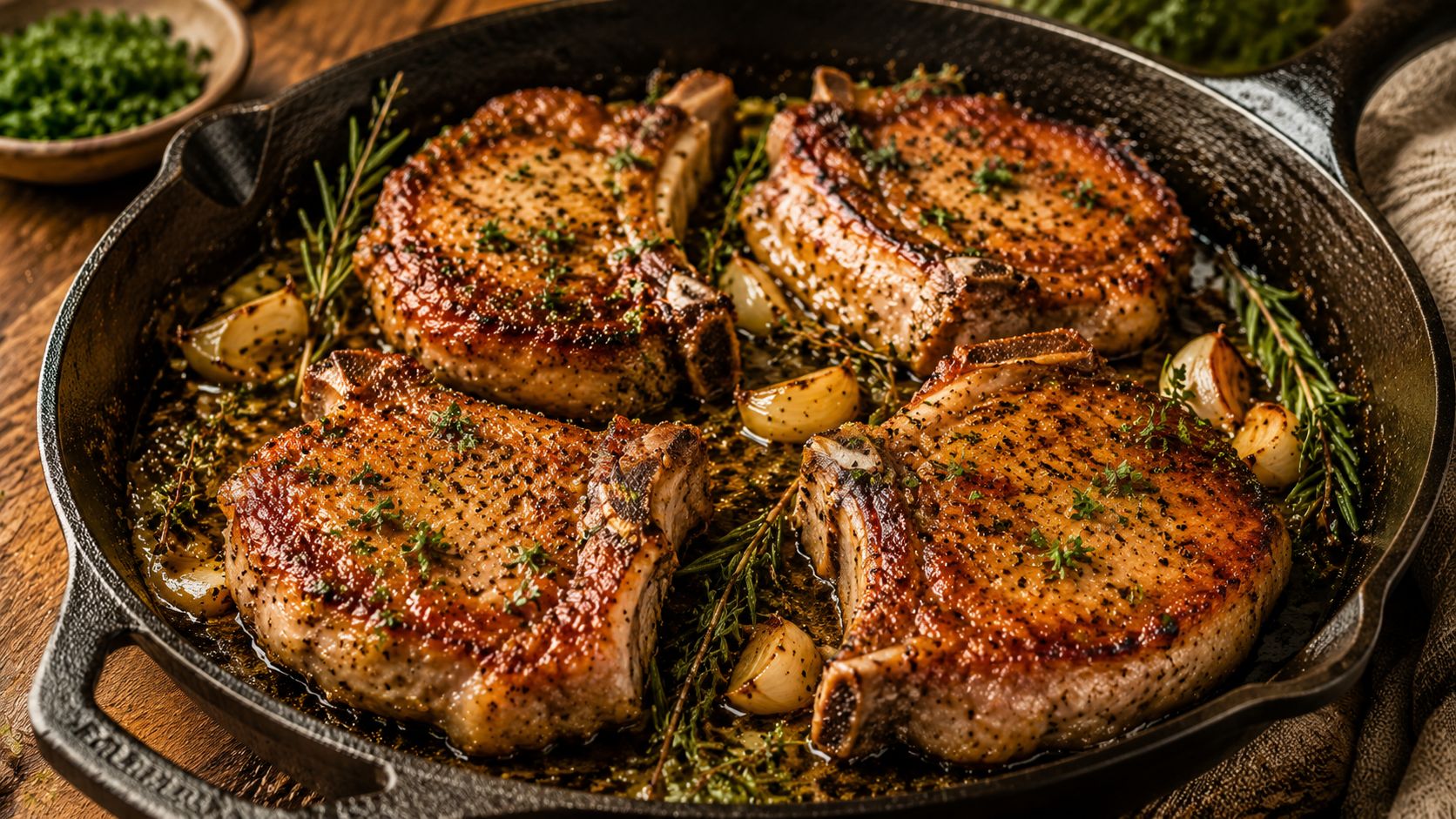
Pork Chop Recipes: Skillet-Seared With Garlic Butter
Season bone-in pork chops generously, sear in a hot cast iron skillet for 3-4 minutes per side, then finish in a 400°F oven until they reach 145°F internal temperature. Rest for 5 minutes before serving to keep them juicy.
Pork chops were the dinner I associated with disappointment for a long time because the version I ate most growing up was thin, overcooked, and dry in a way that no amount of applesauce could address. I had written them off as a category of food that wasn't worth pursuing, which it turns out is the wrong conclusion to draw from thin pork chops cooked too long. It's a technique problem, not a pork problem.
The first thing that changed everything was the thickness. Thin-cut pork chops overcook before they can develop a crust. By the time the exterior is seared, the interior is already past done. Bone-in chops that are at least an inch thick — ideally an inch and a half — have enough mass that you can get a proper sear on the outside before the center goes above 145°F, which is the temperature at which pork is done without being dry.
The skillet method: cast iron, high heat, oil heated until smoking. Dry the chops thoroughly, season aggressively with salt and pepper, and sear two to three minutes per side without touching them. The chops will release cleanly when the crust has formed. Add butter, smashed garlic, and fresh thyme when you flip, and baste continuously for the last minute of cooking. The internal temperature should reach 140°F — it carries to 145°F while resting.
Rest five minutes before cutting. The five minutes are where the pork chops you remember and the pork chops you're about to eat diverge completely.
Ingredients
- 4 bone-in pork chops, 1 to 1½ inches thick (about 8–10 oz each)
- 1½ teaspoons kosher salt
- 1 teaspoon freshly ground black pepper
- 1 teaspoon garlic powder
- ½ teaspoon smoked paprika
- 2 tablespoons neutral oil (canola or avocado oil)
- 3 tablespoons unsalted butter
- 4 cloves garlic, smashed
- 3 sprigs fresh thyme
- 2 sprigs fresh rosemary
- 1 tablespoon fresh parsley, chopped (for serving)
Instructions
- 1Remove pork chops from the refrigerator 30 minutes before cooking. This is not optional —? cold meat hitting a hot pan is how you end up with chops that are overcooked outside and raw inside, which is the worst outcome in all of cooking.
- 2Preheat your oven to 400°F. Place your cast iron skillet in the oven while it preheats so the pan is screaming hot when you need it.
- 3Pat the pork chops completely dry with paper towels. Moisture is the enemy of a good sear. Combine salt, pepper, garlic powder, and smoked paprika in a small bowl and season both sides of each chop generously. Press the seasoning in so it actually commits.
- 4Carefully remove the cast iron from the oven using heavy oven mitts (that skillet is hostile) and set it over high heat on the stovetop. Add the oil and heat until it shimmers and just starts to smoke.
- 5Add the pork chops to the pan without crowding them —? cook in batches if needed. Do not move them. Do not check them. Do not apologize to them. Let them sear undisturbed for 3 to 4 minutes until a dark golden crust forms. Flip once.
- 6After flipping, add the butter, smashed garlic, thyme, and rosemary to the pan. As the butter melts, tilt the pan slightly and use a spoon to baste the tops of the chops with the foaming garlic herb butter. Do this for about 60 seconds.
- 7Transfer the entire skillet to the 400°F oven. Roast for 8 to 12 minutes, depending on thickness, until an instant-read thermometer inserted into the thickest part reads 145°F. Do not guess. Use the thermometer.
- 8Remove from oven, tent loosely with foil, and rest for 5 full minutes. The internal temperature will continue to rise slightly and the juices will redistribute. Cutting into them immediately is how you lose all that work onto the cutting board.
- 9Spoon any remaining pan butter over the chops, scatter with fresh parsley, and serve immediately.
Pro Tips
- Thickness is everything. Thin-cut pork chops —? anything under ¾ inch —? overcook before the crust develops. Buy thick ones. If the grocery store only has thin ones, that is the grocery store's opinion, and you don't have to agree with it.
- Do not skip the resting step. Five minutes feels like forever when you're hungry and the kitchen smells like garlic butter, but this is where the juicy part happens. Set a timer. Walk away. You earned this.
- If your cast iron skillet has been with you since the Clinton administration and has never been re-seasoned, this recipe will also reveal that, and that's fine —? just add it to the list of things to deal with in the new year.
Substitutions
Storage Instructions
Store leftover pork chops in an airtight container in the refrigerator for up to 3 days. Reheat gently in a covered skillet over low heat with a splash of broth or water to prevent drying, or in a 325°F oven for 10-12 minutes until warmed through. Microwaving works in a pinch but produces results I will not defend.
Make Ahead
Season the chops and leave them uncovered on a wire rack in the refrigerator for up to 24 hours before cooking. This acts as a dry brine, improving both seasoning depth and the final crust. Remove from the fridge 30 minutes before cooking as directed.
Frequently Asked Questions
How do I keep pork chops from drying out in the pan?
Two things matter most: thickness and temperature. Use chops at least 1 inch thick, cook to exactly 145°F internal temperature (not higher), and rest them for 5 minutes before cutting. Thin chops overcook in seconds. Skipping the rest loses all the juice you just worked to keep. Both errors are recoverable in future batches —? but not in this one.
Do I need a cast iron skillet or can I use a regular pan?
Cast iron is ideal because it holds heat evenly and goes from stovetop to oven without drama. A heavy stainless steel skillet works nearly as well. Do not use a nonstick pan for this recipe —? nonstick coatings are not rated for the high heat needed to build a proper sear, and the oven temperature will push most of them past their safe limit.
Why did my pork chops turn out tough and chewy?
Overcooked, almost certainly. Pork chops have very little fat to protect them once the internal temp climbs past 155°F, and they turn dry and chewy fast. Get an instant-read thermometer and pull them at 145°F with a 5-minute rest. If they were thin-cut, that's a second factor —? thin chops overcook before a proper crust can form.
Can I make this recipe without an oven?
Yes. For stovetop-only pork chops, use the same sear method but cover the skillet after flipping, reduce heat to medium-low, and cook 6-10 minutes until the internal temperature hits 145°F. Check it early. The steam-finishing method works well but produces a softer exterior crust than the oven finish.
Can I use frozen pork chops?
Thaw them completely in the refrigerator first —? ideally overnight. Cooking from frozen leads to uneven cooking where the outside overcooks before the center reaches a safe temperature. Once fully thawed, follow the recipe as written, including the 30-minute counter rest before searing.
Is this recipe gluten-free?
As written, yes —? every ingredient in this recipe is naturally gluten-free. Just verify your smoked paprika and any store-bought spice blends are processed in gluten-free facilities if you're cooking for someone with celiac disease. The butter baste and fresh herbs contain no gluten.
What should I serve with pan seared pork chops?
The garlic herb butter left in the pan is basically a sauce and should not be wasted —? spoon it over mashed potatoes, roasted vegetables, or crusty bread. Pork chops pair well with apple-based sides (applesauce, roasted apples, apple slaw), braised greens, roasted sweet potatoes, or a simple green salad. The pan itself is full of flavor, so use it.
How long should I let pork chops sit out before cooking?
Thirty minutes at room temperature is the target. This narrows the temperature gap between the outside and center of the chop, which means more even cooking and a better sear. Do not leave them out longer than 2 hours for food safety reasons. If you forgot and they went back in the fridge, just add 2-3 minutes to your oven time and use your thermometer.