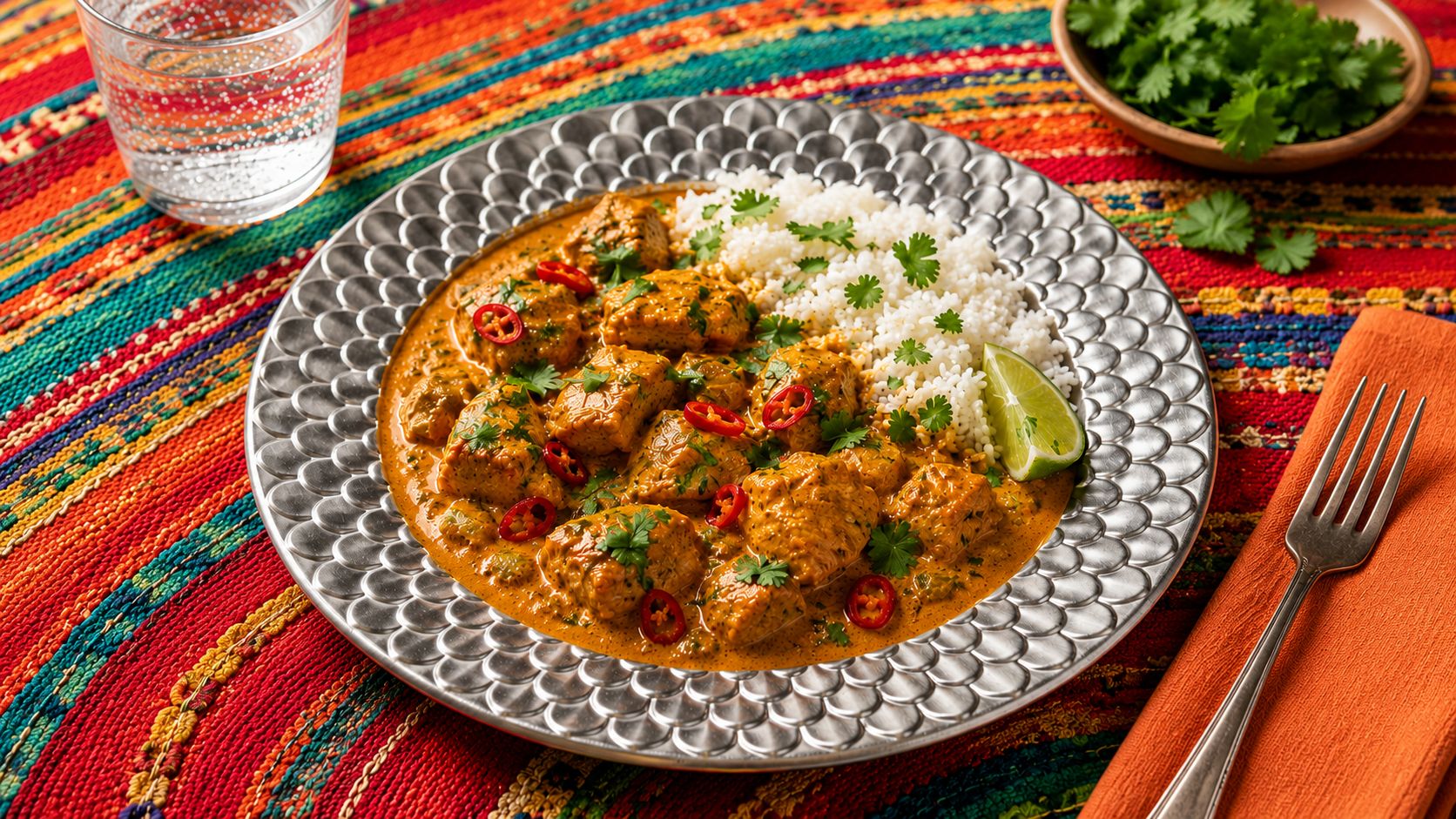
Dairy Free Recipes: One-Pan Coconut Curry Chicken
This dairy free coconut curry chicken is made by sautéing aromatics in oil, simmering chicken in full-fat coconut milk with curry paste and spices, and finishing with lime juice and fresh herbs. The entire dish comes together in one pan in about 35 minutes.
I invited someone over for dinner who ate dairy-free and immediately started mentally rewriting everything I knew how to cook. Creamy dishes were out. Butter was apparently negotiable depending on the strictness level. I stood in front of my fridge for longer than I want to admit and eventually texted a friend for help instead of Googling, which felt more urgent.
The friend said: coconut curry. Full-fat coconut milk, red curry paste, chicken thighs. Everything goes in one pan. Done in thirty minutes. Dairy-free by default, not by compromise.
What surprised me was that the dish wasn't a workaround. It wasn't "this is good for dairy-free." It was just good. The full-fat coconut milk gives you the richness and creaminess that heavy cream would, with a sweetness that works with the curry paste in a way that cream doesn't quite achieve. The chicken thighs stay moist through the simmer. The whole thing comes together in a single pan and the cleanup takes about four minutes.
My guest liked it. I made it again two weeks later for myself, for no reason except that it was one of the easiest, best dinners I'd made in a while. The absence of dairy was not the point. The presence of coconut milk very much was.
Ingredients
- 1.5 lbs boneless, skinless chicken thighs, cut into 1.5-inch pieces
- 1 tablespoon coconut oil or neutral vegetable oil
- 1 medium yellow onion, diced
- 4 cloves garlic, minced
- 1 tablespoon fresh ginger, grated (or 1 teaspoon ground ginger)
- 2 tablespoons red curry paste (check label —? most are dairy free)
- 1 teaspoon ground turmeric
- 1 teaspoon ground cumin
- 1/2 teaspoon smoked paprika
- 1/2 teaspoon kosher salt, plus more to taste
- 1/4 teaspoon black pepper
- 1 can (13.5 oz) full-fat coconut milk
- 1/2 cup low-sodium chicken broth (or vegetable broth)
- 1 tablespoon fish sauce (or soy sauce for a pescatarian-free version)
- 1 teaspoon coconut sugar or regular sugar
- Juice of 1 lime
- 1/4 cup fresh cilantro, roughly chopped
- Cooked jasmine rice, for serving
- Optional: thinly sliced Thai chilies or red pepper flakes for heat
Instructions
- 1Pat the chicken pieces dry with paper towels and season lightly with salt and pepper. Drying the chicken matters —? wet chicken steams instead of sears, and steamed chicken has no personality.
- 2Heat the oil in a large, heavy-bottomed skillet or Dutch oven over medium-high heat until shimmering, about 2 minutes.
- 3Add the chicken in a single layer. Sear without moving for 3 minutes until golden on one side. Flip and sear another 2 minutes. The chicken does not need to be cooked through yet. Transfer to a plate and set aside.
- 4Reduce heat to medium. Add the diced onion to the same pan and cook, stirring occasionally, for 4-5 minutes until softened and starting to turn golden.
- 5Add the garlic and grated ginger. Cook for 1 minute, stirring constantly, until fragrant. Watch this step —? garlic burns fast and a burned garlic situation cannot be recovered from.
- 6Add the red curry paste, turmeric, cumin, and smoked paprika. Stir everything together and cook for 90 seconds, letting the spices bloom in the residual oil. The pan will look like something is going wrong. It is not going wrong. This is bloom.
- 7Pour in the coconut milk and chicken broth. Stir well, scraping up any browned bits from the bottom of the pan. Those bits are flavor. Do not waste them.
- 8Add the fish sauce and sugar. Stir to combine. Bring the sauce to a gentle simmer over medium heat.
- 9Return the seared chicken to the pan, nestling it into the sauce. Reduce heat to medium-low and simmer, uncovered, for 12-15 minutes until the chicken is cooked through (internal temperature of 165°F) and the sauce has thickened slightly.
- 10Remove from heat. Squeeze in the lime juice and stir. Taste the sauce and adjust salt as needed.
- 11Garnish with fresh cilantro and optional sliced chilies. Serve immediately over jasmine rice.
Pro Tips
- Full-fat coconut milk only. Light coconut milk is coconut milk that has given up on itself. The fat is what gives this sauce its body and richness —? do not compromise this.
- Read your curry paste label before buying. Most red curry pastes are naturally dairy free, but a few brands add shrimp paste, which matters for vegetarians. Thai Kitchen and Maesri are reliable choices widely available in grocery stores.
- If your sauce is thinner than you'd like after the simmer, remove the chicken with a slotted spoon, crank the heat to medium-high, and let the sauce reduce for 2-3 minutes while the chicken rests. The sauce will tighten without drying out the chicken.
Substitutions
Storage Instructions
Store leftovers in an airtight container in the refrigerator for up to 4 days. The flavors deepen overnight —? this is genuinely better the next day. Reheat gently on the stovetop over medium-low heat with a splash of broth or water to loosen the sauce. Freezes well for up to 3 months; thaw overnight in the refrigerator before reheating.
Make Ahead
The sauce base (through the spice bloom and coconut milk addition) can be made up to 2 days ahead and refrigerated. When ready to cook, bring the sauce to a simmer, add the seared chicken, and proceed from step 9. Alternatively, the entire finished dish reheats beautifully and can be made a full day in advance.
Frequently Asked Questions
Why do my dairy free curry sauces always taste watery or thin?
The usual culprit is light coconut milk or skipping the simmer time. Full-fat coconut milk is essential for body and richness. If your sauce is still thin after the recommended simmer, remove the chicken, increase heat to medium-high, and reduce the sauce for 2-3 extra minutes uncovered. The sauce will thicken as moisture evaporates. Don't skip blooming the spices in oil either —? that step builds the base flavor before the liquid even goes in.
Is red curry paste actually dairy free?
Most red curry pastes are naturally dairy free —? they're made from dried chilies, lemongrass, galangal, garlic, and shrimp paste. However, always read the label. Some brands do add unexpected ingredients. Thai Kitchen and Maesri are two widely available options that are reliably dairy free. If you're cooking for someone with a severe dairy allergy, confirm the label on whatever brand you have in hand.
Can I make this dairy free recipe vegetarian or vegan?
Yes, easily. Swap the chicken for one 15-oz can of drained chickpeas plus 2 cups of cauliflower florets. Skip the searing step and add them directly to the sauce. Replace fish sauce with soy sauce or coconut aminos. Everything else stays the same. Simmer for 15 minutes until the cauliflower is tender. The coconut milk base makes this dish naturally rich without any animal products beyond the protein.
Can I make this ahead of time for meal prep?
This is one of the best meal prep options I know. Make the full dish, let it cool completely, then portion into airtight containers. It keeps in the refrigerator for 4 days and the flavor genuinely improves after 24 hours as the spices settle in. Reheat on the stovetop with a splash of broth to keep the sauce from thickening too much. It also freezes well for up to 3 months.
How do I store and reheat leftovers without drying out the chicken?
Store chicken and sauce together, not separately —? the sauce keeps the chicken moist. Reheat gently on the stovetop over medium-low heat, adding a small splash of chicken broth or water to loosen the sauce as it warms. Avoid high heat reheating, which tightens the chicken and makes the sauce oily. Microwave works in a pinch at 50% power in 90-second intervals, stirring between each.
Is this recipe gluten free as well as dairy free?
Yes, this recipe is naturally gluten free and dairy free. Coconut milk, curry paste, and the listed spices contain no gluten. The one variable is fish sauce —? most are gluten free but some brands include wheat. Check your label, or substitute coconut aminos, which are both gluten free and soy free. Serve over certified gluten free rice to keep the entire meal compliant.
How spicy is this curry and how do I adjust it?
With 2 tablespoons of standard red curry paste, this is a medium heat —? noticeable warmth but not punishing. To reduce heat, use 1 tablespoon of curry paste or substitute with yellow curry paste, which is milder. To increase heat, add a full tablespoon of red curry paste, include thinly sliced Thai chilies in the sauce, or add a pinch of cayenne with the bloomed spices. Taste as you go.
What should I serve with this dairy free chicken curry?
Jasmine rice is the classic choice and absorbs the sauce well. Brown rice works if you prefer the nuttier flavor and added fiber. For a lower-carb option, cauliflower rice or a simple cucumber salad with rice vinegar dressing both complement the richness of the sauce. Warm gluten free naan —? several brands exist —? is also a reasonable life decision if you can find it.