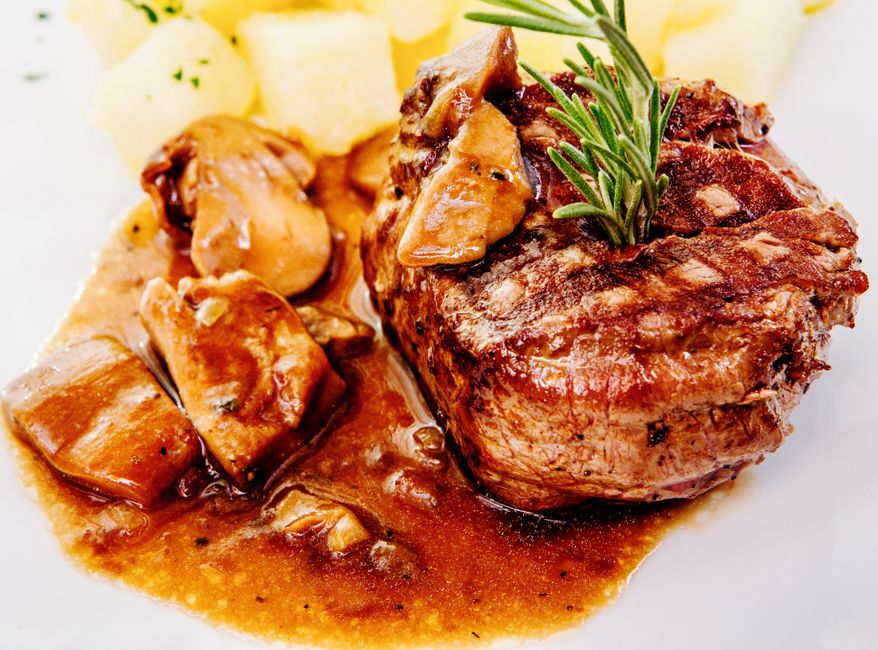
Herb-Crusted Beef Tenderloin Recipe: Perfect Every Time
To make beef tenderloin, tie the roast, season it generously, sear it in a hot oven-safe skillet, then roast at 425°F until it reaches 130°F internally for medium-rare. Rest it for at least 15 minutes before slicing.
A friend hosted Christmas dinner one year and decided, on short notice, to make beef tenderloin for the first time. No thermometer. An oven that ran hot. Confidence that significantly outpaced experience. He pulled it from the oven when it "looked right," which turned out to mean overcooked uniformly through to a gray interior that matched his expression when he sliced it.
We ate it. Nobody said much. The sides were good.
I got a meat thermometer after that dinner. Not a pointed lesson — just a personal decision that some things are too expensive to guess at. Beef tenderloin costs more than most weeknight proteins and it is extremely sensitive to temperature. Pull it at 125°F for rare, 130-135°F for medium-rare, and rest it for at least 15 minutes. The internal temperature will climb another 5 degrees while it sits off the heat.
Sear the outside in a hot, oiled pan before it ever sees the oven. The crust is not decorative — it is the difference between a roast that looks like a special occasion and one that looks like it arrived in shrink-wrap. Herb butter on top during the last few minutes of roasting finishes the whole thing.
My friend now hosts every year. He also now owns two thermometers, which I consider a sign of character growth.
Ingredients
- 1 whole beef tenderloin (4 to 4½ pounds), trimmed and tied
- 2 tablespoons olive oil
- 2 tablespoons unsalted butter, softened
- 6 garlic cloves, minced
- 2 tablespoons fresh rosemary, finely chopped
- 2 tablespoons fresh thyme leaves
- 1 tablespoon Dijon mustard
- 2 teaspoons kosher salt
- 1 teaspoon freshly ground black pepper
- ½ teaspoon smoked paprika
- 1 tablespoon neutral oil (canola or vegetable) for searing
Instructions
- 1Remove the tenderloin from the refrigerator 45 to 60 minutes before cooking to bring it to room temperature. Pat it completely dry with paper towels —? surface moisture is the enemy of a good sear.
- 2Preheat your oven to 425°F. If your tenderloin is not already trimmed and tied, fold the thin tail end under the roast and tie it with butcher's twine at 1½-inch intervals to create an even thickness throughout. This ensures it cooks evenly.
- 3In a small bowl, combine the softened butter, garlic, rosemary, thyme, Dijon mustard, salt, pepper, and smoked paprika. Mix well into a paste.
- 4Rub the olive oil over the entire surface of the tenderloin, then coat it thoroughly with the herb-butter paste, pressing it into the meat. Every surface should be covered.
- 5Heat a large oven-safe skillet (cast iron preferred) over high heat until it is very hot —? about 2 to 3 minutes. Add the neutral oil. Sear the tenderloin for 2 to 3 minutes per side, rotating to sear all sides, until a deep brown crust forms all around. This takes approximately 8 to 10 minutes total. Do not rush this step.
- 6Transfer the skillet directly to the preheated oven. Roast until an instant-read thermometer inserted into the thickest part reads 125°F to 130°F for medium-rare, approximately 20 to 25 minutes. For medium, pull at 135°F. Check at the 18-minute mark.
- 7Remove the tenderloin from the oven and transfer it to a cutting board. Tent loosely with foil and rest for 15 minutes. The internal temperature will rise about 5°F during resting. Do not skip this step.
- 8Remove the butcher's twine. Slice crosswise into ½-inch to ¾-inch medallions and serve immediately.
Pro Tips
- A reliable instant-read thermometer is non-negotiable here. Guessing the doneness of a $60 roast based on touch is how you end up having a very quiet holiday dinner.
- Pat the meat bone-dry before searing. Any moisture left on the surface will steam instead of sear, and you will get a gray crust instead of the dark, mahogany one you are looking for. This is the most common mistake and the easiest to avoid.
- Let the roast rest the full 15 minutes. Cutting into it early releases all the juices onto the cutting board, and the cutting board does not deserve them.
Substitutions
Storage Instructions
Refrigerate leftovers wrapped tightly in plastic wrap or in an airtight container for up to 3 days. Reheat gently in a 250°F oven until just warmed through, about 15 minutes, to avoid overcooking the meat further. Sliced tenderloin also makes an exceptional cold roast beef sandwich the next day, which is honestly the second-best thing about making it.
Make Ahead
The herb-butter paste can be made up to 2 days in advance and stored covered in the refrigerator. The tenderloin can also be rubbed with the paste, covered tightly, and refrigerated up to 24 hours before cooking —? this actually deepens the flavor. Bring to room temperature for at least 45 minutes before searing.
Frequently Asked Questions
What internal temperature should beef tenderloin be?
Pull the tenderloin from the oven at 125°F to 130°F for medium-rare —? it will rise to about 130°F to 135°F while resting. For medium, pull at 135°F, targeting a final temp of 140°F. Well-done is technically possible but represents a personal choice I won't judge out loud. Use an instant-read thermometer. This is not a dish for guessing.
How do I keep beef tenderloin from drying out?
Three things: bring the meat to room temperature before cooking so the outside doesn't overcook before the inside comes up, don't roast past your target temperature, and rest it the full 15 minutes before slicing. Skipping the rest is the single most common reason tenderloin ends up dry. The juices need time to redistribute back into the meat fibers.
Why did my beef tenderloin cook unevenly?
The most likely cause is that the roast wasn't tied before cooking. Beef tenderloin tapers at one end, so without tying the tail up under itself, that thin section overcooks while the center is still coming up to temperature. Tie it at 1½-inch intervals before searing, every time, no exceptions. It takes two minutes and makes a significant difference in even doneness.
Can I make beef tenderloin ahead of time for a dinner party?
Yes —? with strategy. You can rub the roast with the herb paste up to 24 hours ahead and refrigerate it uncovered (the air-drying helps the crust). Sear and roast the day of. If you need more flexibility, look into the reverse-sear method: roast low and slow to your target temp, then blast it with high heat right before serving. It holds better and still delivers an excellent crust.
How long does it take to cook a whole beef tenderloin?
At 425°F after searing, a 4- to 4½-pound whole tenderloin takes approximately 20 to 25 minutes to reach medium-rare. A smaller center-cut roast (2 to 2½ pounds) takes 15 to 20 minutes. Always go by internal temperature, not time —? ovens vary, roast thickness varies, and a thermometer is the only honest measurement in this process.
Is beef tenderloin gluten-free?
The recipe as written is gluten-free —? beef, butter, fresh herbs, olive oil, and spices contain no gluten. Double-check your Dijon mustard label, as some brands contain small amounts of wheat. Substitute a certified gluten-free mustard or whole grain variety if needed. This dish is also naturally dairy-free if you replace the butter with additional olive oil in the herb paste.
What should I serve with roasted beef tenderloin?
Classic pairings: creamy horseradish sauce or a simple red wine pan sauce made from the drippings, roasted asparagus, mashed or au gratin potatoes, and a crusty bread that can handle the juices. For a holiday table, roasted root vegetables and a simple green salad with acidic dressing work well to balance the richness of the roast.
Can I cook beef tenderloin without a cast iron skillet?
Yes. A heavy oven-safe stainless steel skillet or a roasting pan works fine. What you want is a pan that can handle screaming-hot stovetop searing and then transfer directly to a 425°F oven without a complaint. Do not use nonstick. The coating cannot handle that temperature and will degrade. If you only have nonstick, sear in a regular skillet and transfer the tenderloin to a roasting rack in a roasting pan for the oven step.