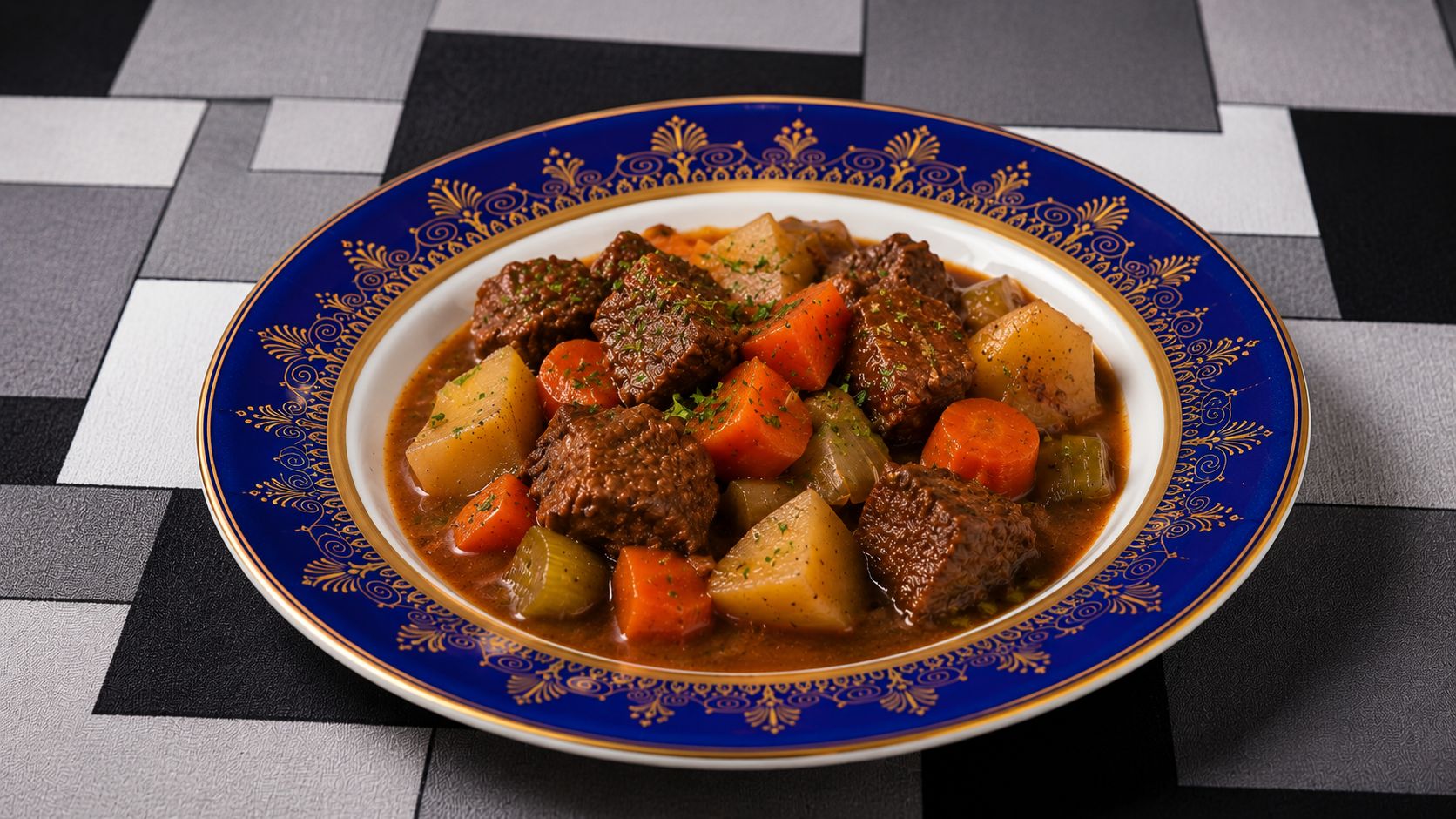
Classic Beef Stew Recipe: Rich, Thick, Built Right
To make beef stew, brown seasoned chuck roast in batches in a heavy pot, then braise it low and slow with vegetables, broth, and aromatics for 1.5 to 2 hours until the beef is fork-tender. The key steps are searing the meat properly and giving the stew enough time to develop its flavor.
The first winter I lived somewhere with an actual winter, I ordered beef stew delivered to the apartment and what arrived was gray meat in brown water with carrots that had given up on the whole situation. I ate it standing over the counter at 10pm in a coat I hadn't taken off yet and thought: this cannot be what people mean when they say beef stew.
Tried to make it the following Saturday. First mistake: didn't sear the beef — just dropped it into the pot with the vegetables and liquid. It simmered for two hours and came out looking like the delivery version but from a classier ZIP code. Same problem. No crust on the meat, no depth in the broth, just wet ingredients sharing a container.
The fix was searing the beef until it had real color — not pale, not gray, an actual crust — and then building everything on top of that. The browned bits stuck to the bottom of the pot are not something to clean around. They are the flavor. Deglaze with wine or broth, cook the tomato paste down, add the stock and vegetables, then let it braise low and slow until the beef is soft and the liquid has become something that tastes like it was made on purpose.
That second pot didn't look like delivery food. It looked like something someone had decided to make. That's the whole difference.
Ingredients
- 2.5 lbs beef chuck roast, cut into 1.5-inch cubes
- 1.5 tsp kosher salt, plus more to taste
- 1 tsp black pepper
- 3 tbsp all-purpose flour
- 3 tbsp olive oil, divided
- 1 large yellow onion, roughly chopped
- 4 cloves garlic, minced
- 2 tbsp tomato paste
- 1 cup dry red wine (such as Cabernet Sauvignon or Merlot)
- 3 cups beef broth, low sodium
- 1 cup water
- 1 tbsp Worcestershire sauce
- 3 medium carrots, peeled and cut into 1-inch pieces
- 3 medium Yukon Gold potatoes, cut into 1.5-inch chunks
- 2 stalks celery, cut into 1-inch pieces
- 2 sprigs fresh thyme (or 1/2 tsp dried thyme)
- 1 bay leaf
- 1 tbsp fresh flat-leaf parsley, chopped (for serving)
Instructions
- 1Pat the beef cubes dry with paper towels —? this is not optional, this is everything. Season generously with salt and pepper, then toss with the flour until lightly coated on all sides.
- 2Heat 1.5 tbsp olive oil in a large Dutch oven or heavy-bottomed pot over medium-high heat until shimmering. Working in two batches (do not crowd the pan), sear the beef for 2 to 3 minutes per side until deep brown. Remove seared beef to a plate and repeat with remaining oil and beef. Set all browned beef aside.
- 3Reduce heat to medium. Add the chopped onion to the same pot and cook, stirring occasionally, for 4 to 5 minutes until softened and beginning to color. Scrape up any browned bits from the bottom as you go.
- 4Add the minced garlic and tomato paste. Stir and cook for 1 to 2 minutes until the tomato paste darkens slightly and smells slightly less raw.
- 5Pour in the red wine and bring to a simmer, scraping up all the browned bits from the bottom of the pot. Let it reduce for 2 to 3 minutes.
- 6Return the seared beef and any collected juices to the pot. Add the beef broth, water, and Worcestershire sauce. Tuck in the thyme sprigs and bay leaf. Bring to a boil, then reduce heat to low, cover, and simmer for 1 hour.
- 7After 1 hour, add the carrots, potatoes, and celery. Stir to combine, replace the lid, and continue simmering on low for 45 minutes to 1 hour more, until the beef is fork-tender and the vegetables are cooked through but not disintegrating.
- 8Remove the bay leaf and thyme sprigs. Taste and adjust salt and pepper as needed. If you want a thicker stew, mash a few potato chunks against the side of the pot and stir them in. Let rest uncovered for 5 minutes before serving.
- 9Ladle into bowls and top with fresh parsley. Serve with crusty bread or nothing —? it stands on its own.
Pro Tips
- Dry the beef before you do anything else. Moisture is the enemy of a good sear, and a good sear is the entire personality of this stew. Use paper towels and mean it.
- Don't add the vegetables at the start. I learned this the hard way when my potatoes turned into something I could legally call mashed and they were not supposed to be mashed. Forty-five minutes to one hour is enough time for them to cook without giving up entirely.
- Chuck roast is the right cut here —? it has enough fat and connective tissue to become tender and silky over a long braise. A leaner cut like round will finish the cook dry and disappointed, which is a feeling I wouldn't wish on meat.
Substitutions
Storage Instructions
Store cooled leftovers in an airtight container in the refrigerator for up to 4 days. Reheat gently on the stovetop over medium-low heat, adding a splash of broth or water if the stew has thickened too much. Freeze in airtight containers for up to 3 months —? freeze without the potatoes if possible, as they can become grainy after thawing. Thaw overnight in the refrigerator before reheating.
Make Ahead
This stew is genuinely better the next day. Make it fully through step 9, let it cool completely, and refrigerate overnight. Reheat on the stovetop over medium-low, covered, stirring occasionally. The flavors deepen significantly after 24 hours and the broth thickens naturally as it sits.
Frequently Asked Questions
Why do I need to sear the beef before adding it to the stew?
Searing creates a Maillard reaction —? that deep browning on the outside of the meat that produces dozens of flavor compounds that plain boiled beef simply doesn't have. It also adds to the fond, the browned bits stuck to the pot, which dissolve into the liquid and give the broth its backbone. Skipping it produces a flat, gray stew. Ask me how I know.
Can I make this beef stew in a slow cooker or Instant Pot?
Yes to both. For a slow cooker: complete the searing and wine-reduction steps on the stovetop first, then transfer everything to the slow cooker and cook on low for 8 hours or high for 4 to 5 hours, adding vegetables in the last 2 hours. For an Instant Pot: use the sauté function for browning and deglazing, then pressure cook on high for 35 minutes with a 15-minute natural release.
Why did my beef stew turn out tough instead of tender?
Almost always a time issue —? the beef needed more time. Chuck roast has a lot of collagen, which takes sustained low heat to break down into gelatin. If you cook it hard and fast, it seizes up and gets tough. The fix is almost always 'go lower and longer.' If your stew is tough at the 1.5-hour mark, don't panic. Just put the lid back on and check again in 30 more minutes.
Can I make beef stew ahead of time?
You should make beef stew ahead of time. The flavor after 24 hours in the refrigerator is noticeably better —? the broth deepens, the fat redistributes, and everything tastes more intentional. Make it the day before, cool it completely before covering, refrigerate overnight, and reheat gently on the stovetop. It takes about 15 minutes over medium-low to come back to temperature.
How do I store leftover beef stew?
Cool the stew completely before storing —? don't put a hot pot directly in the fridge. Transfer to airtight containers and refrigerate for up to 4 days. For longer storage, freeze for up to 3 months. If you know you're freezing it, leave the potatoes out if possible, as they get grainy after thawing. Thaw frozen stew overnight in the refrigerator before reheating slowly on the stovetop.
How do I thicken beef stew if it's too thin?
Three reliable methods: mash a few of the cooked potato chunks against the side of the pot and stir them in; mix 1 tablespoon of cornstarch with 2 tablespoons of cold water and stir it into the simmering stew; or just leave the lid off for the last 15 to 20 minutes of cooking and let it reduce naturally. The flour coating on the beef also contributes thickening as it cooks —? so this method usually handles itself.
Can I make this beef stew gluten-free?
Yes. Substitute the all-purpose flour used to coat the beef with an equal amount of gluten-free all-purpose flour or cornstarch. Check your Worcestershire sauce label —? most major brands are gluten-free, but a few contain barley malt, so worth confirming. Everything else in this recipe is naturally gluten-free. The texture and flavor will be essentially identical.
What kind of beef is best for stew?
Chuck roast is the standard and for good reason —? it has a high ratio of collagen and intramuscular fat that melts into the braising liquid over time, creating that silky, rich texture. Avoid lean cuts like sirloin or round for long braises; they'll finish the cook dry and fibrous. If chuck isn't available, bone-in short ribs work beautifully and add even more richness.