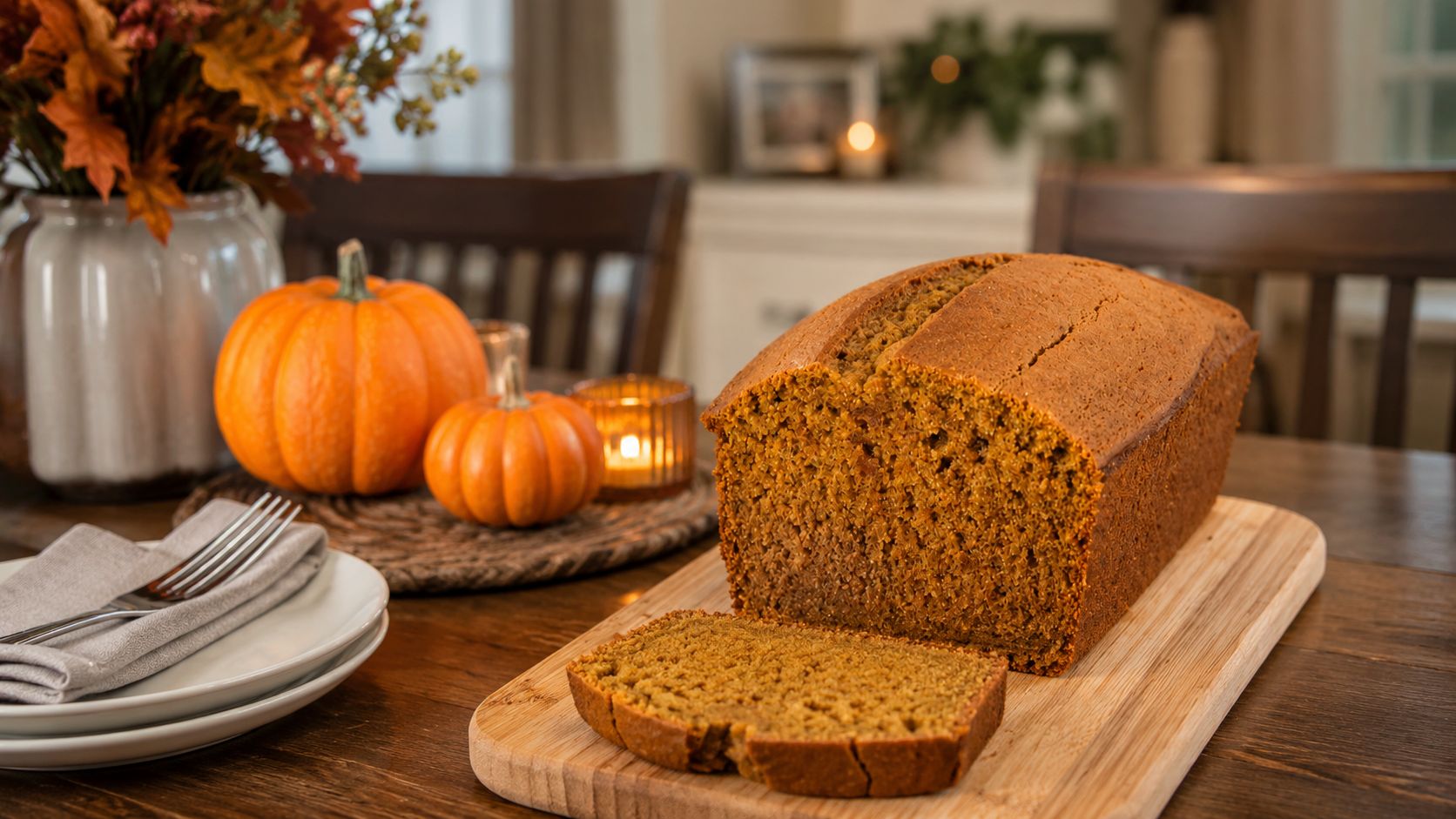
Pumpkin Bread Recipe That'll Make October Worth It
To make pumpkin bread, whisk together pumpkin puree, eggs, oil, and sugar, then fold in flour, baking soda, and warm spices. Pour into a greased loaf pan and bake at 350°F for 60–65 minutes until a toothpick comes out clean.
The first week of October, a woman in my building named Christine starts baking pumpkin bread. You know because the hallway smells like cinnamon and clove when you walk past her door, which is the kind of thing that makes you feel like you're in a commercial about autumn except it's actually happening. She has been doing this for as long as I've lived in the building. She has never offered an explanation. She doesn't need to.
I asked her once for the recipe and she gave it to me without hesitation, which was generous because the recipe is genuinely excellent and she could have kept it to herself. The key things she mentioned: real pumpkin, not pumpkin pie filling, which has added sugar and spices already in it and throws off the balance. Brown butter instead of melted butter, because the toasty quality it adds comes through in a loaf this simply flavored. And a slightly longer baking time at lower heat than most recipes suggest — 325°F for 65 minutes rather than 350°F for 55, which keeps the top from over-browning before the center sets.
The spice blend matters. Cinnamon alone produces something flat. Cinnamon, ginger, nutmeg, and a small amount of clove produces something that tastes like October has a flavor and someone bottled it correctly. The batter comes together in one bowl in about ten minutes. The rest is patience.
I make it every October now. The hallway outside my apartment has improved as a consequence. Christine approved when I brought her a slice. The bar she sets is high and I have accepted this as motivation rather than discouragement.
Ingredients
- 1 cup (240g) pure pumpkin puree (not pumpkin pie filling)
- 2 large eggs, room temperature
- 1/2 cup (120ml) vegetable oil
- 1/2 cup (120ml) water
- 1 cup (200g) granulated sugar
- 1/2 cup (110g) packed light brown sugar
- 1 3/4 cups (220g) all-purpose flour
- 1 teaspoon baking soda
- 1/2 teaspoon fine salt
- 1 1/2 teaspoons ground cinnamon
- 1/2 teaspoon ground nutmeg
- 1/4 teaspoon ground cloves
- 1/4 teaspoon ground ginger
Instructions
- 1Preheat your oven to 350°F (175°C). Grease a 9x5-inch loaf pan with butter or nonstick spray, then lightly flour it or line with parchment paper.
- 2In a large bowl, whisk together the pumpkin puree, eggs, vegetable oil, water, granulated sugar, and brown sugar until smooth and fully combined.
- 3Add the flour, baking soda, salt, cinnamon, nutmeg, cloves, and ginger directly to the wet ingredients. Fold with a rubber spatula or wooden spoon until just combined —? stop when you no longer see dry streaks. Do not overmix.
- 4Pour the batter into the prepared loaf pan and spread it evenly. The batter will be thick.
- 5Bake on the center rack for 60–65 minutes, until a toothpick or skewer inserted into the center comes out clean or with just a few moist crumbs. If the top is browning too fast, tent loosely with aluminum foil after 45 minutes.
- 6Let the bread cool in the pan on a wire rack for 15 minutes, then turn it out and let it cool completely on the rack before slicing —? at least 30 more minutes. Slicing too early gives you a gummy, structureless interior.
Pro Tips
- Use pure pumpkin puree, not pumpkin pie filling. The can labels are almost the same size and the mistake is almost too easy to make. I am not pointing fingers. I am pointing at myself.
- Don't overmix the batter once you add the flour. A few lumps are fine. Overmixing develops gluten and turns a tender loaf into something with the texture of a firm handshake.
- The bread is done when a toothpick comes out with a few moist crumbs, not wet batter. If it comes out completely clean, you've got about ten more minutes than you needed —? still good, just drier.
Substitutions
Storage Instructions
Wrap cooled pumpkin bread tightly in plastic wrap or store in an airtight container at room temperature for up to 4 days. Refrigerate for up to 7 days —? bring to room temperature before serving or warm a slice briefly in the microwave. Freeze individual slices wrapped in plastic and stored in a zip-top bag for up to 3 months; thaw at room temperature or microwave from frozen for 45–60 seconds.
Make Ahead
Pumpkin bread actually improves on day two as the spices deepen and the crumb settles. Bake it the day before you need it, cool completely, wrap tightly, and store at room temperature overnight. It will be noticeably better and you will feel like a genius who planned ahead, even if that wasn't exactly your original intention.
Frequently Asked Questions
How do I know when pumpkin bread is fully baked?
Insert a toothpick or thin skewer into the center of the loaf —? it should come out clean or with just a few moist crumbs clinging to it. Wet batter means more time. The internal temperature of a fully baked quick bread is around 200–205°F if you want to use an instant-read thermometer, which is a reasonable and underrated move.
Can I use fresh pumpkin instead of canned?
Yes, but you need to cook and drain it first. Roast or steam sugar pumpkin, blend until smooth, then spread on a clean kitchen towel or cheesecloth and press out excess moisture. Fresh pumpkin can be significantly wetter than canned, and that extra water will make your bread sink and stay gummy in the center. One cup of well-drained fresh puree works as a 1:1 swap.
Why did my pumpkin bread sink in the middle?
Usually one of three things: underbaking, too much liquid in the batter, or overmixing. Check that you used pumpkin puree (not pie filling), measure flour correctly by spooning it into the cup and leveling off rather than scooping, and resist testing the bread before the 55-minute mark. Opening the oven too early can cause the center to collapse.
Can I make pumpkin bread in mini loaf pans or muffin tins?
Absolutely. For mini loaf pans, reduce the bake time to about 35–40 minutes. For standard muffin tins, fill cups two-thirds full and bake for 20–22 minutes. For mini muffins, check at 13–15 minutes. Use the toothpick test regardless —? oven and pan variations matter more than the clock does.
How do I make pumpkin bread more moist?
Oil is your friend here —? it keeps quick bread tender longer than butter does. Don't overbake, since even a few extra minutes dries out the crumb noticeably. You can also add 2 tablespoons of sour cream or plain Greek yogurt to the wet ingredients for extra moisture and a subtle tang that works beautifully with the warm spices.
Can I add mix-ins like chocolate chips or nuts?
Yes. Fold in up to 3/4 cup of mix-ins after combining the wet and dry ingredients. Chocolate chips, chopped walnuts, pecans, and dried cranberries all work well. Toss them lightly in flour first to help them stay suspended in the batter rather than sinking to the bottom while baking.
Is this pumpkin bread recipe dairy-free?
As written, yes —? it contains no butter, milk, or cream. Use a flax egg swap if you also need it egg-free. The base recipe is naturally dairy-free, which makes it friendly for more guests than you might expect, and you don't have to announce it like a press release for people to enjoy it.
Can I reduce the sugar in this recipe?
You can reduce the total sugar by up to 1/4 cup without significantly affecting texture. Going lower than that can impact moisture and how the loaf browns. The pumpkin puree adds natural sweetness, so a slight reduction reads as less sweet but still balanced. I wouldn't go below 1 1/4 cups total sugar without expecting a noticeably drier, paler result.