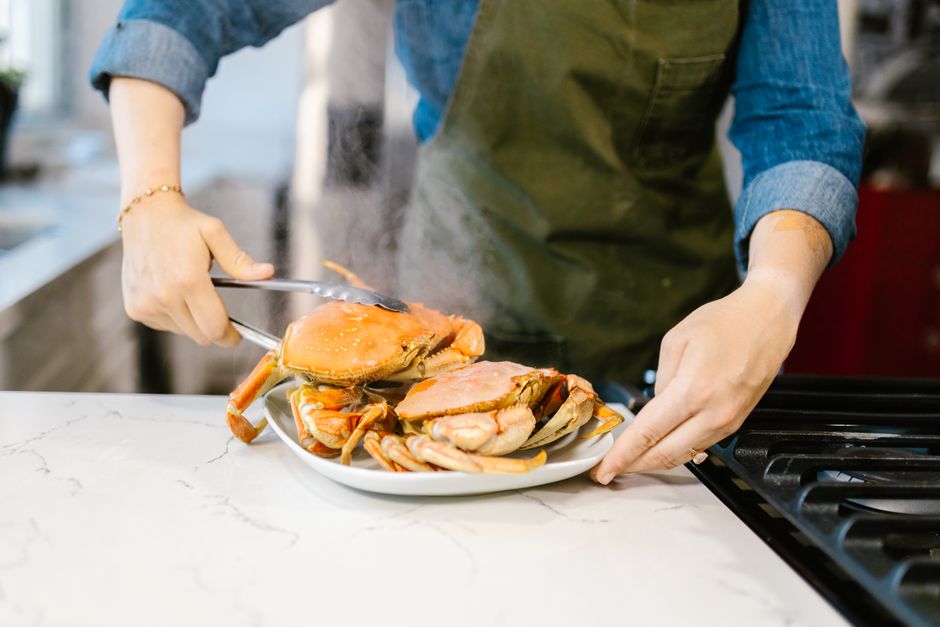
Crab Cakes Recipe That Actually Tastes Like Crab
To make crab cakes, gently combine lump crab meat with a light binder of egg, mayo, mustard, and minimal breadcrumbs, form into patties, and pan-fry in butter and oil over medium-high heat for 3-4 minutes per side until deep golden brown. The key is using more crab than filler and handling the mixture as little as possible.
I took a weekend trip to the coast and ate crab cakes at a small place that served them as an appetizer without ceremony — just a plate, a little remoulade, and the understanding that this was why you came to places near water. They were mostly crab. You could pull them apart and find actual lump crab meat, not a breadcrumb core with crab paste holding it together. I ate all of them and then thought about them for approximately the rest of the weekend.
I made crab cakes at home the following week using a recipe that seemed reasonable and the result was a perfectly edible crab-flavored patty that had more in common with a crab-seasoned breadcrumb than with what I'd eaten at the restaurant. The ratio was wrong. The binder had taken over.
The fix is restraint with the filler. A small amount of egg and mayonnaise, a minimal amount of breadcrumbs — just enough to help the cakes hold their shape during the sear — and the rest is actual crab. The crab will fall apart slightly in the pan if you're not careful, but that's a feature of a cake that has real crab in it, not a structural failure. Chill them before searing so they're firm, use a thin spatula, and don't move them until they release cleanly from the pan.
They don't fully match the restaurant. The restaurant had the coast and the walk to get there and the particular afternoon. But the crab cake itself was close enough that I stopped ordering them out exclusively.
Ingredients
- 1 lb fresh lump crab meat, picked over for shells
- 1/3 cup mayonnaise
- 1 large egg, lightly beaten
- 1 tablespoon Dijon mustard
- 1 teaspoon Worcestershire sauce
- 1 teaspoon Old Bay seasoning
- 1/2 teaspoon kosher salt
- 1/4 teaspoon black pepper
- 1 tablespoon fresh lemon juice
- 2 tablespoons finely diced red bell pepper
- 2 tablespoons thinly sliced green onion
- 1/3 cup panko breadcrumbs, plus 1/2 cup for coating
- 2 tablespoons unsalted butter
- 2 tablespoons neutral oil (such as canola or vegetable)
Instructions
- 1Pick through the crab meat carefully and remove any remaining shell fragments. Drain it well —? excess moisture is the enemy of a crab cake that holds together.
- 2In a large bowl, whisk together the mayonnaise, beaten egg, Dijon mustard, Worcestershire sauce, Old Bay, salt, pepper, and lemon juice until fully combined.
- 3Add the red bell pepper, green onion, and 1/3 cup panko to the wet mixture. Stir to combine.
- 4Add the crab meat to the bowl. Using a rubber spatula or your hands, fold the mixture together very gently —? you want to keep large chunks of crab intact. Over-mixing breaks up the crab and makes the final texture dense. Stop as soon as everything is just combined.
- 5Cover the bowl and refrigerate for at least 30 minutes. This is not optional. The rest period lets the mixture firm up so the cakes hold their shape in the pan. (This is also when I wash the dishes and have a glass of wine, which is its own form of mise en place.)
- 6Place the remaining 1/2 cup panko in a shallow dish. Divide the crab mixture into 8 equal portions, roughly 1/3 cup each. Form each portion into a patty about 3/4-inch thick. Gently press each patty into the panko to coat both sides, shaking off any excess.
- 7Heat a large skillet —? cast iron or stainless steel, not nonstick —? over medium-high heat. Add the butter and oil together. The oil raises the smoke point of the butter so it doesn't burn before your crab cakes do.
- 8Once the butter is melted and the pan is hot (a drop of water should sizzle immediately), add the crab cakes in a single layer, leaving space between them. Do not crowd the pan. Work in batches if necessary.
- 9Cook undisturbed for 3 to 4 minutes until the bottom is deep golden brown. Resist the urge to check or move them —? the crust needs time to set or the cakes will fall apart when you flip.
- 10Flip once, carefully, using a thin spatula. Cook another 3 to 4 minutes on the second side until equally golden.
- 11Transfer to a paper towel-lined plate. Serve immediately with lemon wedges and remoulade or tartar sauce.
Pro Tips
- Use the best crab you can afford —? fresh lump crab from the seafood counter beats canned every single time. Canned crab will work in a pinch, but drain it extremely well and taste it before you season, because the salt levels vary wildly.
- The 30-minute chill in the refrigerator is load-bearing. Skip it and your crab cakes will spread in the pan like they're trying to escape. The cold rest is what makes them behave.
- Do not use a nonstick skillet for this. You need the fond, the real sear, the crust that makes the whole thing worth doing. A nonstick pan will give you a pale, apologetic crab cake and nobody deserves that.
Substitutions
Storage Instructions
Cooked crab cakes keep in an airtight container in the refrigerator for up to 2 days. Reheat in a 375°F oven for 10-12 minutes or in a skillet over medium heat with a little butter —? this restores the crust. The microwave will make them soft and sad. Uncooked formed patties can be refrigerated for up to 24 hours before cooking.
Make Ahead
Form the crab cakes, place on a parchment-lined sheet pan, cover tightly with plastic wrap, and refrigerate for up to 24 hours before cooking. You can also freeze uncooked patties: freeze them flat on a sheet pan until solid, then transfer to a freezer bag for up to 1 month. Cook from frozen at medium heat, adding 2-3 extra minutes per side.
Frequently Asked Questions
Why do my crab cakes fall apart in the pan?
Three likely culprits: you skipped the refrigerator rest (the chill firms the binder and is non-negotiable), you used too much moisture in the crab (always drain and pat dry before mixing), or you moved them too soon in the pan. Let the crust fully set before attempting to flip —? usually 3 to 4 minutes over medium-high heat. A cake that's ready to flip will release cleanly from the pan.
What's the best crab meat to use for crab cakes?
Fresh or pasteurized lump crab meat is the gold standard. Jumbo lump gives you those beautiful large chunks but is pricier —? regular lump is an excellent balance of quality and cost. Backfin (flaked) crab works but produces a denser texture. Avoid imitation crab entirely for this recipe; it won't behave the same way and the flavor is a completely different conversation.
Can I bake crab cakes instead of frying them?
Yes. Brush the formed, panko-coated cakes with melted butter on both sides and bake on a greased sheet pan at 400°F for 12-15 minutes, flipping once halfway through. You'll get a lighter result with less crust development than pan-frying. For maximum color, broil for the last 2 minutes —? watch them closely because the difference between golden and burnt is about 45 seconds.
How do I keep crab cakes from being too dense or bready?
Use less binder than you think you need —? this recipe keeps breadcrumbs to 1/3 cup in the mixture intentionally. The crab-to-filler ratio should feel slightly precarious, like it might not hold together, and then it does. Also avoid over-mixing: fold the crab in gently to preserve the large chunks. Dense, bready crab cakes are almost always the result of too much filler and too much stirring.
Can I make crab cakes gluten-free?
Yes, easily. Substitute gluten-free panko breadcrumbs (widely available) in both the mixture and the coating —? same quantity. Check that your Worcestershire sauce and Dijon mustard are gluten-free, as some brands contain trace wheat. Everything else in this recipe is naturally gluten-free. The texture holds up well with GF panko.
What sauce goes with crab cakes?
Classic remoulade (mayo, Dijon, capers, hot sauce, lemon) is the traditional pairing and the one I'd go to first. Tartar sauce is a close second and extremely easy to make at home. A simple aioli or even a squeeze of plain lemon over a cold glass of something works too. For a lighter option, a cucumber-dill yogurt sauce cuts through the richness nicely.
Can I use imitation crab meat for this recipe?
Technically yes, but the result will be meaningfully different —? imitation crab (surimi) is softer, sweeter, and releases more moisture, which can make the cakes harder to hold together. If that's what you have, drain and squeeze it as dry as possible and reduce the mayonnaise by about a tablespoon. The flavor will be milder and the texture less substantial, but it's not a disaster.
What size should crab cakes be, and how many does this recipe make?
This recipe makes 8 crab cakes using about 1/3 cup of mixture per patty, shaped to roughly 3 inches wide and 3/4 inch thick. That size gives you the right ratio of crust to interior and cooks evenly in the 3-4 minute window. For appetizer-sized crab cakes, divide the mixture into 12 smaller portions and reduce the cooking time to about 2-3 minutes per side.