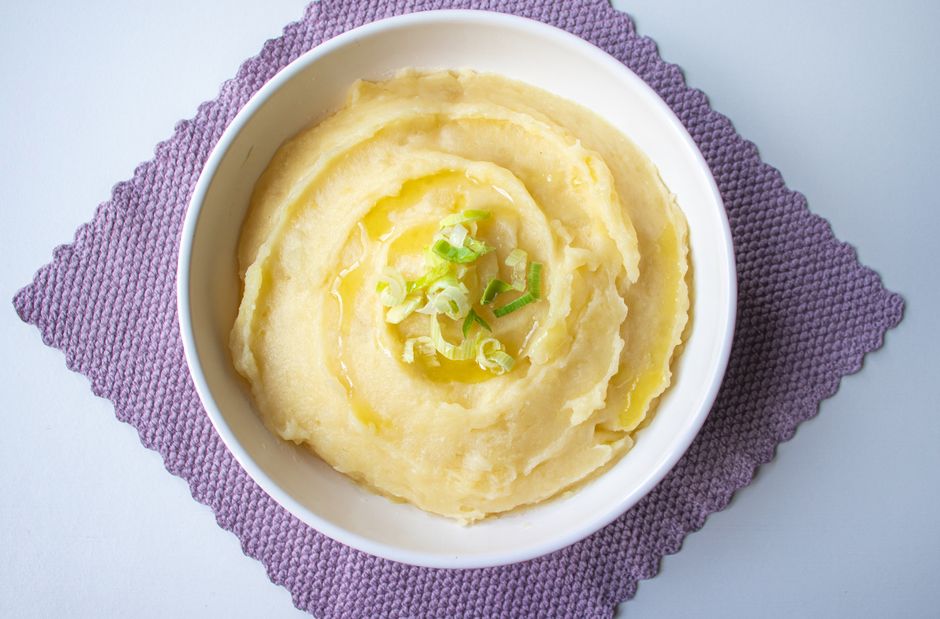
Mashed Potatoes Recipe That Actually Turns Out Right
Boil peeled, cubed Yukon Gold potatoes in salted water until fork-tender, about 15–18 minutes, then drain and rice or mash them with warm butter and hot cream. Season generously with salt and white pepper and serve immediately for best texture.
I ordered mashed potatoes at a steakhouse once because they were listed as a side and the description said "whipped" and I had a theory I wanted to test. The potatoes arrived and were silky and rich in a way that my home version had never managed, and I ate them alongside the steak and spent a portion of that dinner trying to reverse-engineer what they had done differently.
My home mashed potatoes were always slightly gluey. Not bad — fine, recognizably mashed potatoes — but with a gummy texture that I had attributed to potatoes being potatoes rather than to anything I was doing wrong. What I was doing wrong was using a hand mixer, which activates the starch in potatoes and produces a paste when you work it too vigorously. The steakhouse was using a ricer or food mill, which breaks the potatoes apart without developing the starch.
The other thing: warm butter and cream, not cold. Cold dairy cools the potatoes as it goes in, which makes the starch seize and the texture tighten. Heat the butter and cream together until the butter melts and the cream is just warm, then add it to the hot riced potatoes gradually, folding rather than stirring. Season aggressively — potatoes need more salt than you think they do.
The ratio that works: about half a stick of butter and a quarter cup of cream per pound of potato. It is not diet food. It is not pretending to be. It is mashed potatoes done correctly, which is the only standard worth holding them to.
Ingredients
- 3 pounds Yukon Gold potatoes, peeled and cut into 1½-inch chunks
- 1 tablespoon kosher salt, plus more for seasoning
- 8 tablespoons (1 stick) unsalted butter, cut into pieces
- ¾ cup heavy cream
- ¼ cup whole milk
- ½ teaspoon white pepper
- Salt to taste
Instructions
- 1Place the peeled, cut potatoes in a large pot and cover with cold water by at least 2 inches. Add 1 tablespoon kosher salt. Starting in cold water instead of boiling water ensures the potatoes cook evenly all the way through.
- 2Bring to a boil over high heat, then reduce to a steady simmer. Cook uncovered for 15–18 minutes, until a fork slides into the center of a chunk with zero resistance. If it drags even slightly, give it 2 more minutes.
- 3While the potatoes cook, combine the butter, heavy cream, and whole milk in a small saucepan over low heat. Warm until the butter is fully melted and the mixture is hot but not boiling —? about 3–4 minutes. Keep warm on the lowest setting. Cold dairy will cool your potatoes down fast and seize the starch. Don't skip this step.
- 4Drain the potatoes thoroughly and return them to the hot pot over low heat for 1–2 minutes, shaking gently, to drive off excess moisture. Dry potatoes absorb butter better. This step matters.
- 5Pass the potatoes through a ricer or food mill directly back into the pot. If you don't have either, use a handheld potato masher —? mash firmly but stop the moment there are no lumps. Do not use a hand mixer or stand mixer under any circumstances.
- 6Pour in about two-thirds of the warm cream-butter mixture and fold it in gently with a wooden spoon or rubber spatula, using slow folding motions rather than aggressive stirring. Add more of the warm mixture until you reach your preferred consistency.
- 7Season with white pepper and salt to taste. Taste again. Add more butter if you want to —? there is no wrong answer here. Serve immediately.
Pro Tips
- Yukon Gold potatoes are the move. Russets are starchier and can go fluffy-dry; Yukon Golds have a natural buttery flavor and a texture that holds up without getting gluey. I learned this the hard way after years of loyalty to russets that I now consider misplaced.
- Rice or mill your potatoes if you have the equipment. A ricer breaks the cells more gently than a masher, which means less starch release, which means your potatoes stay fluffy instead of turning into wallpaper paste. It's a fifteen-dollar tool and it will change how you feel about yourself.
- Taste the water before you drain. The pot water should taste pleasantly salty, like a mild soup. If you can't taste any salt, your potatoes are underseasoned at their core —? and no amount of finishing salt will fix what the interior never had.
Substitutions
Storage Instructions
Store leftover mashed potatoes in an airtight container in the refrigerator for up to 4 days. They will thicken as they cool. Reheat gently on the stovetop over low heat, stirring in a splash of warm cream or milk to bring them back to their original consistency. Microwave reheating works in a pinch —? cover loosely, heat in 60-second intervals, and stir between each interval. Do not freeze —? the texture breaks down on thawing and you will be sad.
Make Ahead
You can boil and rice the potatoes up to 2 hours ahead and hold them uncovered at room temperature. When ready to serve, rewarm the pot gently over low heat and add your warm butter-cream mixture as directed. Full make-ahead (fully finished, then reheated) is possible but results in slightly less fluffy texture. If doing a full make-ahead, undercook the potatoes by 2 minutes and add an extra splash of cream when reheating.
Frequently Asked Questions
Why did my mashed potatoes turn out gluey and sticky?
Overworking is the most common culprit. When you beat or over-mash potatoes, you rupture the starch granules and release amylose, a sticky starch molecule that turns your potatoes into paste. Use a ricer, food mill, or handheld masher and stop the moment the lumps are gone. A hand mixer or stand mixer will almost always produce a gluey result.
Should I use a ricer or a masher for mashed potatoes?
A ricer gives you the most consistently fluffy result because it breaks up the potato with minimal mechanical force. A masher is perfectly fine and what most home cooks use —? just mash firmly and stop before you start stirring aggressively. Either tool beats a hand mixer. The goal is gentle disruption, not total annihilation of the potato's cell structure.
What's the best potato for mashed potatoes?
Yukon Gold potatoes are the best all-around choice for creamy mashed potatoes. They have a naturally buttery flavor, medium starch content, and a smooth texture that doesn't go gluey easily. Russets work well too and produce a fluffier, drier result —? good if you prefer a lighter texture. Waxy potatoes like red potatoes are not ideal; they stay dense and chunky.
Can I make mashed potatoes ahead of time?
Yes, with some caveats. The best approach is to boil and rice the potatoes up to 2 hours ahead, then finish them with warm butter and cream right before serving. Fully finished mashed potatoes can be made up to a day ahead and reheated gently on the stovetop or in a slow cooker on low, but the texture will be slightly less fluffy. Add a splash of warm cream when reheating to restore the consistency.
How do I store and reheat leftover mashed potatoes?
Refrigerate in an airtight container for up to 4 days. Reheat on the stovetop over low heat, adding warm milk or cream a splash at a time while stirring gently —? this brings back the original creamy texture. Microwave reheating works if you're in a hurry; heat in 60-second increments and stir between each. Don't freeze mashed potatoes —? the water in the cells expands, and the texture becomes grainy and wet after thawing.
How do I make dairy-free or vegan mashed potatoes?
Substitute vegan butter (Earth Balance or similar) for the unsalted butter and use full-fat oat milk or canned coconut cream in place of the dairy. Warm your substitutes just like you would the real thing —? cold fat is cold fat regardless of origin. The texture is very close to traditional. Coconut cream adds a faint sweetness that most people won't notice when the potatoes are well-seasoned.
How much salt should I add to the potato water?
Enough that it tastes like mild soup —? roughly 1 tablespoon of kosher salt per 3 pounds of potatoes in a large pot of water. Undersalted water means the interior of each potato chunk is bland, and no amount of finishing salt will fully compensate. Taste the water before you boil and adjust. The salt isn't just seasoning the surface; it's seasoning the potato from the inside out.
Why do you heat the cream and butter before adding them?
Cold dairy causes the starch in hot mashed potatoes to contract and seize, which results in a denser, less fluffy texture. When you add warm or hot butter and cream, the mixture incorporates smoothly without shocking the starch. It takes three minutes in a small saucepan and it genuinely makes a difference you can taste. This is one of those things that sounds fussy until you stop doing it and notice the result.