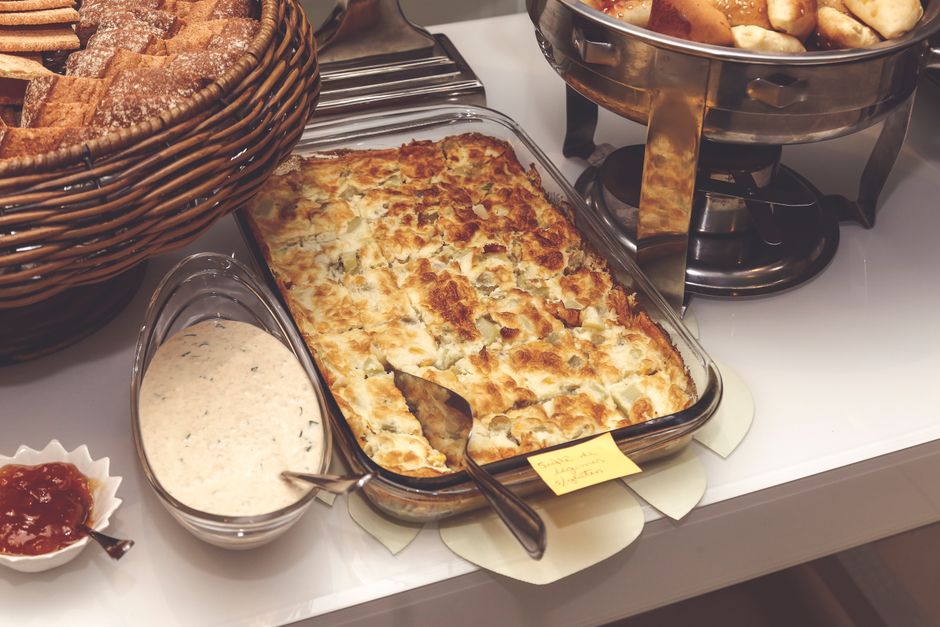
Breakfast Casserole Recipe: Feeds a Crowd, Make It the Night Before
A breakfast casserole is made by layering cooked sausage, eggs, cheese, and bread or hash browns in a baking dish, then baking at 350°F for 45–55 minutes until set and golden. You can assemble it the night before and refrigerate it unbaked, then bake it fresh in the morning.
I stayed over at a friend's place after a late night and woke up suspicious of the sounds coming from the kitchen. It was 7:30 a.m. His mom was moving around in there completely calmly, not making individual plates, not looking stressed, not running anything complicated on the stovetop. She just pulled a casserole dish out of the oven and set it on the counter like she had already won the morning.
I was skeptical of the format. I associated casserole with food made in bulk quantity for institutions. I was wrong about this and I knew it the moment she cut into it. Layers of eggs that had set overnight with cheese and sausage and bread baked into something that wasn't just eggs and wasn't just bread — it was its own thing, holding its shape, hot all the way through.
She told me she put it together the night before and refrigerated it. Thirty seconds of explanation for something that fed eight people without anyone having to stand at a stove at 7 a.m. That is not cooking in bulk for an institution. That is efficiency I needed in my life.
I have made this for every overnight situation I've hosted since. Nobody has ever been disappointed in it. The trick is giving the bread enough time to absorb the custard before it bakes — overnight is ideal, but two hours minimum works in a pinch.
Ingredients
- 1 pound bulk breakfast sausage (mild or hot)
- 1 medium yellow onion, diced
- 1 red bell pepper, diced
- 8 large eggs
- 2 cups whole milk
- 1 teaspoon garlic powder
- 1 teaspoon dry mustard
- 1/2 teaspoon salt
- 1/2 teaspoon black pepper
- 1/2 teaspoon smoked paprika
- 6 cups cubed day-old white sandwich bread (about 8–10 slices, 1-inch cubes)
- 2 cups shredded sharp cheddar cheese, divided
- 2 tablespoons unsalted butter, for greasing and sautéing
- 2 green onions, sliced, for garnish (optional)
Instructions
- 1Preheat your oven to 350°F. Grease a 9x13-inch baking dish generously with butter.
- 2In a large skillet over medium-high heat, cook the sausage, breaking it into crumbles, until browned and cooked through, about 7–8 minutes. Transfer to a paper towel-lined plate, leaving about 1 tablespoon of drippings in the pan.
- 3Add the diced onion and bell pepper to the skillet with the drippings. Sauté over medium heat until softened, about 5 minutes. Remove from heat.
- 4In a large bowl, whisk together the eggs, milk, garlic powder, dry mustard, salt, black pepper, and smoked paprika until fully combined.
- 5Spread the bread cubes evenly across the bottom of the greased baking dish. Top with the cooked sausage, then the sautéed onion and pepper mixture, then 1½ cups of the shredded cheddar.
- 6Pour the egg mixture slowly and evenly over the entire dish. Use a spatula or the back of a spoon to gently press the bread down so it absorbs the egg mixture fully. Let it sit for at least 15 minutes before baking, or cover tightly with plastic wrap and refrigerate overnight.
- 7If the casserole was refrigerated overnight, remove it from the refrigerator 20–30 minutes before baking to take the chill off.
- 8Sprinkle the remaining ½ cup of cheddar cheese over the top. Bake uncovered at 350°F for 45–55 minutes, until the center is set (it should not jiggle when you shake the pan) and the top is golden brown.
- 9Remove from the oven and let rest for 10 minutes before slicing. Garnish with sliced green onions if desired.
Pro Tips
- Day-old bread is not a preference, it's a requirement —? fresh bread turns to mush when it absorbs the egg custard. If your bread is fresh, spread the cubes on a baking sheet and toast them at 300°F for 10–12 minutes to dry them out.
- Press the bread down after you pour the egg mixture. I skipped this step for years because it felt unnecessary and every single time the top layer of bread came out like croutons with commitment issues.
- The casserole is done when the center doesn't jiggle and a knife inserted in the middle comes out clean. If the top is browning too fast before the center sets, tent it loosely with foil for the last 10–15 minutes.
Substitutions
Storage Instructions
Store leftovers covered tightly in the refrigerator for up to 4 days. Reheat individual slices in the microwave for 60–90 seconds or in a 325°F oven for 10–12 minutes until warmed through. The casserole can also be frozen after baking —? wrap individual portions tightly in plastic wrap, then foil, and freeze for up to 2 months. Thaw overnight in the refrigerator before reheating.
Make Ahead
Assemble the entire casserole through step 6 (pouring and pressing the egg mixture), cover tightly with plastic wrap, and refrigerate for up to 18 hours. Remove from the refrigerator 20–30 minutes before baking, top with the remaining cheese, and bake as directed. Do not refrigerate longer than 18 hours —? the bread begins to break down past that point and the texture suffers.
Frequently Asked Questions
How do I know when the breakfast casserole is fully cooked?
The center should be completely set —? no jiggle when you shake the pan. A knife or thin skewer inserted into the middle should come out clean, not wet with egg. The top will be golden brown and slightly puffed. Internal temperature should read 160°F if you want to use a thermometer, which is always a reliable call with egg dishes.
Can I make this breakfast casserole without meat?
Absolutely. Skip the sausage and sauté the vegetables in 1 tablespoon of butter instead of drippings. You can bulk it up with sautéed mushrooms, spinach, or diced zucchini. Just make sure any vegetables you add are cooked and excess moisture is removed before layering —? watery vegetables will make the casserole soggy in a way that can't be recovered.
Why did my breakfast casserole come out soggy in the middle?
Three likely culprits: the bread wasn't dry enough before you assembled it, the egg mixture wasn't fully absorbed before baking, or the oven temperature was too high and the outside set before the center could cook through. Use day-old or lightly toasted bread, let it soak for at least 15 minutes, and bake at a steady 350°F. Tenting with foil if the top browns too fast also helps.
Can I make this breakfast casserole the night before?
Yes, and honestly that's the best way to do it. Assemble everything, pour over the egg mixture, press down the bread, cover tightly with plastic wrap, and refrigerate overnight —? up to 18 hours. In the morning, pull it out 20–30 minutes before baking, top with the remaining cheese, and bake as directed. The overnight rest actually improves the texture by letting the bread fully absorb the custard.
How do I store and reheat leftover breakfast casserole?
Cover leftovers tightly and refrigerate for up to 4 days. For reheating, the microwave works fine for individual portions —? 60 to 90 seconds on medium-high. For best texture, reheat a larger portion in a 325°F oven for 10–12 minutes. You can also freeze individual slices wrapped tightly for up to 2 months. Thaw overnight in the fridge before reheating.
Can I make this breakfast casserole gluten-free?
Yes. Use your preferred gluten-free sandwich bread in place of regular white bread —? a sturdy, sliced variety holds up better than soft gluten-free rolls. Let it dry out before using, since gluten-free bread can be more moisture-sensitive. Check that your sausage is gluten-free as well (most bulk breakfast sausage is, but it's worth confirming the label). Everything else in the recipe is naturally gluten-free.
What size baking dish should I use?
A standard 9x13-inch baking dish is the right size for this recipe and yields 10 generous servings. If you're halving the recipe, a 9x9-inch or 8x8-inch dish works well —? reduce the baking time by about 10 minutes and start checking for doneness at the 35-minute mark. Avoid a dish that's too shallow, as the casserole needs room to puff slightly as it bakes.
Can I add more vegetables or customize the fillings?
Yes, and the casserole is very forgiving about it. Sautéed mushrooms, spinach, diced jalapeños, sun-dried tomatoes, and even leftover roasted potatoes all work well. The key rule: cook and drain any vegetables before adding them. Raw vegetables release water as they bake and will make the casserole uneven in texture. Keep total additions to about 1–1½ cups so the egg-to-filling ratio stays balanced.